Atlanta, GA
Roof Replacement in Atlanta, GA: Talk to Local Pros Today
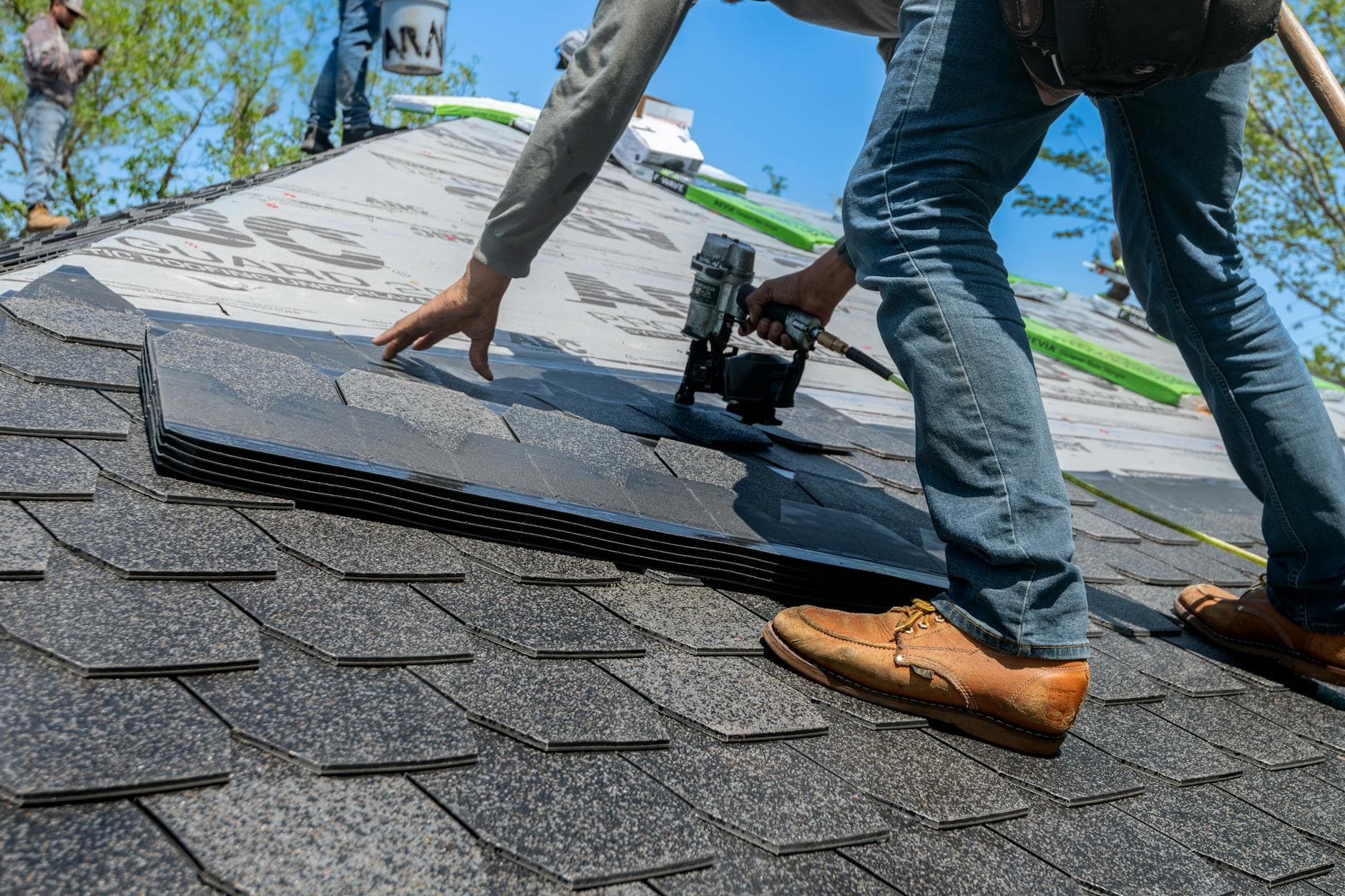
Full roof replacement for asphalt shingle, metal, tile, or flat systems: tear-off, decking inspection, underlayment, and new covering installed by a local crew.
Atlanta roofs face high-humidity asphalt acceleration, hail spikes in spring storm season, and pine-needle gutter loading.
Profile your project, get a tailored checklist, and meet Atlanta pros who specialize in your exact scope.
Roof replacement in Atlanta, GA is a local-code, local-climate, and local-labor-market decision. We connect Atlanta homeowners to a roofer in our network who handles your scope and timeline, by phone.
Roof replacement in Atlanta is a tree-load, severe-storm, and red-clay decision
Replacing a roof in metro Atlanta sits at the intersection of three local factors most generic asphalt jobs ignore. The metro is in the southeastern severe-thunderstorm belt and exposed to multiple NOAA Storm Events Database hail and wind incidents per year, particularly through the spring-into-early-summer convective season. The tree canopy across DeKalb, Fulton, and the older intown neighborhoods is one of the densest in any major U.S. metro, which dramatically raises tree-fall and limb-impact exposure during any storm event. And the regional building stock leans heavily on 1960s–2000s asphalt-shingle suburban homes that are hitting the back half of their useful service life right now.
If your Atlanta roof is past 15 years old, has had any wind, hail, or limb-impact damage since 2023, or hasn't been inspected since the 2024 spring storm season, talk to screened Atlanta replacement pros — most network contractors offer a written inspection plus a no-obligation replacement scope.
Why Atlanta roofs wear out
Four local conditions compress the useful life of a generic asphalt roof in metro Atlanta:
- Tree-canopy debris and tree-fall. Persistent shading from oaks, pines, and hardwoods drives moss and algae growth on north-facing slopes and traps pine-needle and leaf debris in valleys and gutters. Every major wind event drops large limbs across the metro; insurance claims for tree-impact damage routinely outnumber straight-wind shingle uplift claims here, unlike the Houston or Dallas markets.
- Hail and severe-storm exposure. Atlanta sits inside the southeastern hail-and-microburst zone. The metro records 1–3 storm events per year producing 1"+ hail per the Storm Prediction Center climatology, less than DFW but plenty to trigger the carrier-claim and Class 4 impact-rated upgrade conversation.
- Solar load and humidity. South-facing slopes carry heavy summer UV exposure layered on top of high relative humidity from May through September. The combination accelerates shingle granule loss and lifts the published lifespan downward by roughly 10–15% on under-ventilated asphalt roofs, per NRCA technical guidance.
- Red Georgia clay and yard runoff. Heavy summer thunderstorms send concentrated runoff off the roof, and the underlying red clay soil holds water rather than draining it. Properly sized gutters with adequate downspout placement and oversized leaders are not a luxury here — they protect the siding and the foundation as much as the roof.
The combined effect: a generic 110-mph architectural asphalt roof in metro Atlanta commonly lands at 18–24 years of useful life. A Class 4 impact-rated install with full ventilation upgrade and proper gutter sizing routinely reaches 26–32+.
Material recommendations for Atlanta roofs
For the typical metro Atlanta single-family home — asphalt-shingled, 6/12 to 10/12 pitch, hardwood-shaded — the right replacement spec is a Class 4 (UL 2218) impact-rated architectural asphalt shingle with sealed-deck synthetic underlayment, ice-and-water shield in valleys and around penetrations, ring-shank deck nailing, and balanced soffit-and-ridge ventilation. Major brands meeting that spec are GAF Timberline AS II, CertainTeed Landmark Class IV, and Owens Corning Duration Storm. Most Georgia carriers offer a hail-resistance premium credit on Class 4 installs; ask your agent for the exact endorsement language before signing.
For homeowners staying 15+ years, standing-seam Galvalume metal is an increasingly common choice in Buckhead, Brookhaven, Decatur, and the Westside intown neighborhoods. The 40–70 year lifespan, superior wind performance, and modern reflective-coating systems that cut attic temperatures all win at the longer hold. See our asphalt vs metal roof guide for a structured comparison.
For Mediterranean and modern-architecture homes in Sandy Springs and parts of Alpharetta, stone-coated steel delivers the look of a higher-end material with the durability of metal. Plan to verify the structure is rated for the dead load and that HOA covenants permit the profile.
Atlanta-specific install requirements
Five install items separate a quality Atlanta replacement from a generic one:
- Permits. The City of Atlanta requires a residential roofing permit for tear-off and re-roof projects on every property within city limits, with a mid-progress inspection before the final layer goes down. DeKalb, Fulton, Cobb, Gwinnett, and Cherokee counties each enforce parallel permit requirements through their respective building departments. No legitimate Atlanta roofer skips this.
- Ventilation upgrade. Most metro Atlanta roofs over 15 years old are under-ventilated for the local humid-summer climate. A full replacement is the right moment to install balanced soffit intake and continuous ridge exhaust, sized to the attic volume per Section R806 of the IRC. The upgrade pays back inside the first roof cycle in extended life and avoided ice-dam-style moisture damage on the cold-snap days.
- Tree-canopy management. Any reputable Atlanta replacement starts with a walkthrough of overhanging limbs. Branches within 6 feet of the roofline should be pruned before the work begins, and homeowners with mature trees should plan a separate arborist visit if removal or major canopy reduction is needed. Insurers expect this maintenance and may push back on tree-impact claims where it wasn't done.
- Algae-resistant shingles. Atlanta's humid-shaded north slopes are textbook moss and algae conditions. Specify shingles with copper or zinc-strip algae resistance (often labeled "AR" or "StreakGuard"); the warranty premium is small and the avoided dark-streak appearance preserves curb appeal through the warranty period.
- Decking and rotted-wood inspection. Older 1950s–1970s intown homes commonly have plank decking or partial OSB with gaps and degradation around chimneys and dormers. The contractor should plan to overlay 7/16" OSB or replace planks where the moisture meter trips. Skipping this kills the warranty.
Neighborhoods we replace roofs in
Demand patterns vary across metro Atlanta:
- Buckhead, Brookhaven, and Druid Hills — older asphalt roofs hitting end of life on mid-century and turn-of-the-century homes; complex pitches and tree-impact exposure are the dominant variables. Standing-seam metal is gaining share in the modern-architecture renovations.
- Decatur, Inman Park, Grant Park, and East Atlanta — bungalows and craftsman homes with steep pitches, plank decking, and frequent flat-deck rear additions. Typical replacement is tear-off architectural asphalt with full deck overlay; rear flat sections often go to TPO at the same time.
- Sandy Springs, Roswell, and Alpharetta — 1990s–2010s asphalt roofs in master-planned subdivisions. Hail-belt exposure on the western edge of these zones means Class 4 impact-rated shingles are the right floor, paired with carrier hail-deductible discount paperwork.
- Marietta, Smyrna, and Vinings — mixed mid-century and 1980s housing stock. Typical replacement: 22–32 sq Class 4 architectural with ventilation rebuild; ridge-only ventilation systems often need to be supplemented with proper soffit intake on these older builds.
- Lawrenceville, Duluth, and Suwanee — younger asphalt roofs across newer Gwinnett developments. Watch for builder-grade three-tab shingles installed 12–18 years ago that are well past their economic life despite an unexpired "lifetime" warranty.
Insurance and roof replacement in Georgia
Georgia is a one-party insurance state with relatively short notice windows. The Georgia Office of the Commissioner of Insurance publishes consumer guidance on roof-damage claims, and the standard policy form requires prompt notice of loss — many carriers interpret that as within 30 days of the damaging event, though some allow up to a year. File quickly after any storm event; every week of delay weakens the causation argument and the path to a full RCV settlement. See our guides on does insurance cover roof replacement, roof insurance claim deadlines by state, and ACV vs RCV settlement math for the full sequence.
If you have visible damage or a denied claim, our network includes Atlanta-area roofers experienced in carrier negotiations and the Georgia appraisal clause process. Document everything in writing and don't sign anything an out-of-state storm chaser slides across the kitchen table.
What to expect from a network match
Every Atlanta contractor in our network carries an active Georgia state roofer license (where applicable to the work scope), general liability insurance, and a clean background check before any homeowner lead reaches them. We ask network partners to re-confirm license and insurance annually. Match flow: tell us about your project, we route the lead to up to three Atlanta-area pros who specialize in your material and damage profile, and you collect written quotes on the same scope before deciding. See our Atlanta city hub for the full local match and contractor-screening context, and our editorial policy for the sourcing standard behind this page.
Neighborhoods we serve
- Buckhead
- Midtown
- Decatur
- Sandy Springs
- Marietta
- Alpharetta
- Roswell
- Dunwoody
Other services in Atlanta
Roof Repair in Atlanta
Roof Repair from local Atlanta pros.
Storm Damage in Atlanta
Storm Damage from local Atlanta pros.
Flat Roofing in Atlanta
Flat Roofing from local Atlanta pros.
Metal Roofing in Atlanta
Metal Roofing from local Atlanta pros.
Roof Inspection in Atlanta
Roof Inspection from local Atlanta pros.
Roof Replacement in nearby cities
Related guides and tools
Talk to local roof replacement pros in Atlanta
Talk to a Atlanta roof replacement pro who handles full and partial replacements.
Under a minute. One local pro, not 12.
Lead-routing service. Calls may be recorded.