San Bernardino, CA
Roof Replacement in San Bernardino, CA: Talk to Local Pros Today
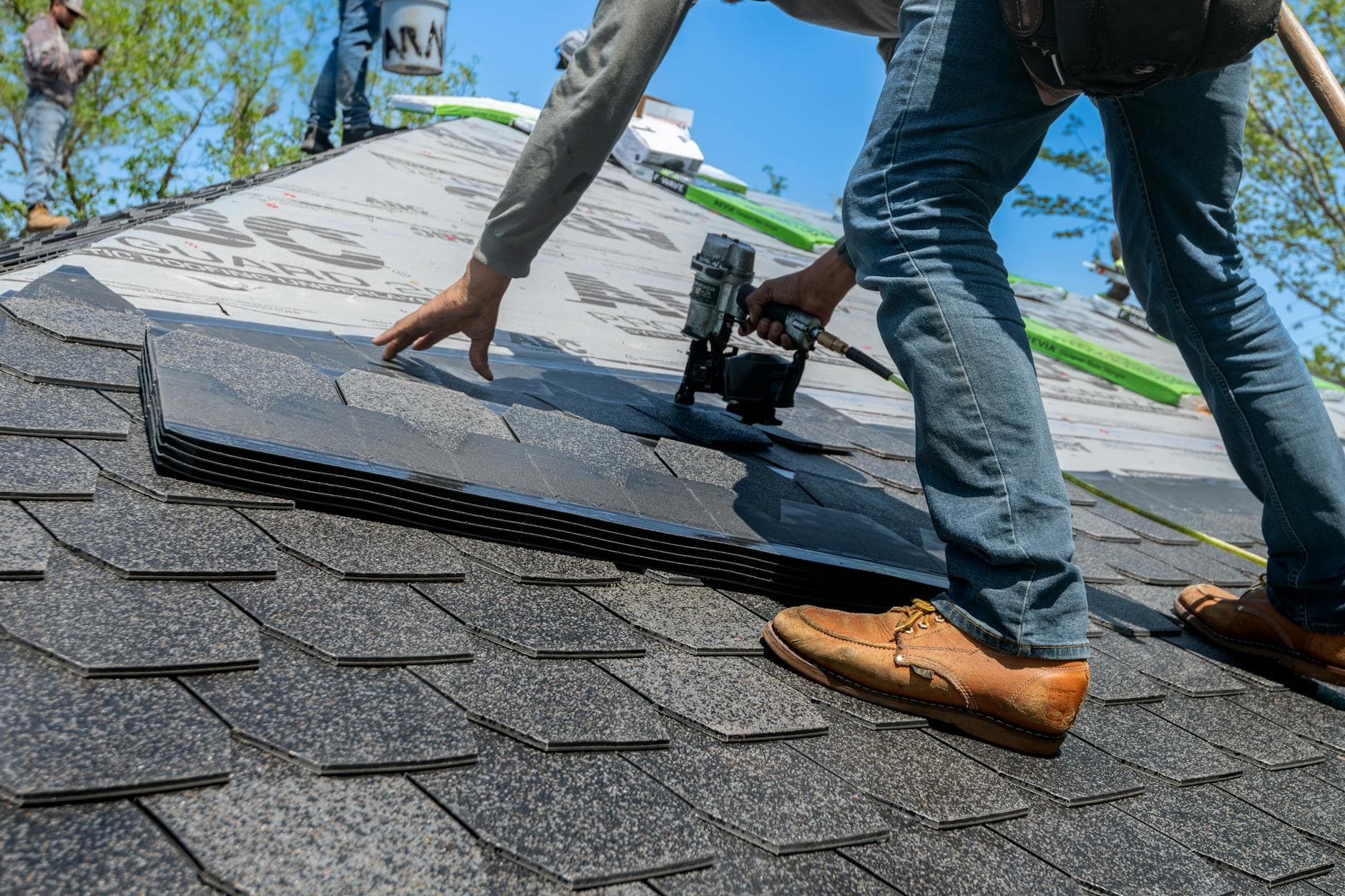
Full roof replacement for asphalt shingle, metal, tile, or flat systems: tear-off, decking inspection, underlayment, and new covering installed by a local crew.
Profile your project, get a tailored checklist, and meet San Bernardino pros who specialize in your exact scope.
Roof replacement in San Bernardino is a Cajon Pass wind, older-stock deck, and Very High FHSZ decision
Replacing a roof in San Bernardino is shaped by California Title 24 Climate Zone 10, the 2025 Very High Fire Hazard Severity Zone designation across the city's foothill neighborhoods, and the Cajon Pass wind regime. The city's median build year is 1973. About 8.8% of the stock is pre-1940 and another 7.8% built in the 1940s, with older inventory concentrated in downtown, Del Rosa, and the historic core. Verdemont, Shandin Hills, and Arrowhead carry both 1970s ranch product and newer foothill subdivisions. The right replacement spec depends on whether your project trips the 50%-area Title 24 cool-roof requirement, whether your address sits on the San Bernardino National Forest interface, and what your tear-off uncovers under older covering. Specifying the right product, the right install detail, and the right contractor for these conditions is the entire job.
If your San Bernardino roof is past 18 years old, has dislodged shingles after the January 2025 Santa Ana event, or sits in the Verdemont or Arrowhead foothill belt with a non-Class A assembly, talk to screened San Bernardino replacement pros and most network contractors offer a written inspection and a no-obligation replacement scope.
What roof replacement actually means in San Bernardino
A San Bernardino reroof is governed by California Residential Code Section R908 and the San Bernardino County EZ Online Permitting Portal for residential reroof submittal. A maximum of two layers of any roof covering is allowed before full tear-off is required. Reroofing over slate, clay, cement, or asbestos tile is not allowed, nor is reroofing over water-soaked or deteriorated covering. The R908 prohibition on overlay over deteriorated covering effectively forces a deck inspection on any older home where covering type or deck condition is unclear at intake.
For homeowners weighing repair against replacement, the roof replacement match tool profiles the project before any contractor conversation.
Local replacement cost factors in San Bernardino
Five San Bernardino-specific factors shape the cost curve on a tear-off replacement:
- Labor market. San Bernardino sits inside the Riverside-San Bernardino-Ontario metro for BLS roofer reporting (SOC 47-2181). The city is a labor-pool anchor for the eastern Inland Empire, so crew travel cost into the city is lower than in foothill or high-desert markets. Reference: BLS OEWS Roofers.
- Older deck risk. Older inventory in downtown, Del Rosa, and the historic core surfaces deck repair scope at tear-off. The R908 prohibition on reroofing over deteriorated covering effectively forces deck repair scope into the replacement budget when a 1940s or 1950s house comes off. The contractor should document the deck condition assumption in writing before signing.
- Hillside access. Verdemont and Arrowhead foothill lots add staging and access cost on top of the base scope. Steeper pitches and harder access lift labor on every line item.
- Material category. Asphalt fiberglass composition shingle dominates the pre-1980 stock. Concrete tile is common on post-1990 tract and on foothill rebuilds. Clay tile appears on Spanish-Revival and Mediterranean-Revival product in Arrowhead and parts of the historic core. Tile reroofs run a different scope curve from shingle.
- Title 24 50%-area trigger. Any replacement that touches more than half the roof area triggers the prescriptive cool-roof requirement (see the Title 24 section). That can shift product selection toward CRRC-listed cool-color SKUs and add a CF1R-ENV documentation step.
Permit and Title 24 specifics for San Bernardino
The permit and code chain on a San Bernardino reroof has four moving parts:
- Permit submittal. Residential reroof submittal routes through the San Bernardino County EZ Online Permitting tool. City counter at 201 North E Street. Hours Monday to Thursday 8 a.m. to 5 p.m., Wednesday 10 a.m. to 5 p.m., Friday 8 a.m. to 4 p.m. Application email CD-Technician@sbcity.org. Status line 909-384-7272. Fees are valuation-based; the city does not publish a flat reroof rate. Reference: City of San Bernardino Building and Safety.
- Inspections. Deck or sheathing inspection after tear-off and before underlayment, in-progress inspection at flashing and underlayment, and final inspection on completion. The R908 overlay restrictions effectively force a deck inspection on any older home where existing covering type or deck condition is unclear at intake.
- Title 24 climate zone. San Bernardino is in California Title 24 Climate Zone 10, the south coast inland band. The steep-slope residential prescriptive minimum is aged solar reflectance 0.25 or SRI 23 paired with a CRRC-listed product. Low-slope minimum is aged SR 0.63 and TE 0.75 or SRI 75. Reference: CRRC California Title 24 values.
- 50%-area trigger. The cool-roof prescriptive requirement engages on alterations that replace more than 50% of the roof area or more than 2,000 sq ft, whichever is less. Below the threshold the work is treated as repair. The EZ Online Permitting reroof tool lists a Cool Roof Form as a required resource and the CF1R-ENV cool-roof certificate is required at final inspection.
Class A fire assembly requirement in San Bernardino
San Bernardino is among the cities classified inside Very High Fire Hazard Severity Zones under the 2025 CalFire / OSFM update. Verdemont, the Arrowhead foothills, and the Shandin Hills / north-side margin sit directly on the San Bernardino National Forest interface. About 53% of buildings in San Bernardino County are rated at high risk of wildfire damage.
Under the 2026 code cycle, Class A fire-rated assemblies are required on reroofs in fire-hazard zones. Wood shake and shingle are banned. Qualifying products include Class A asphalt fiberglass composition shingles, concrete and clay tile, metal, and fiber cement. Verdemont, the Arrowhead foothill, and the north-side margin are squarely in the rule. Check your address on the San Bernardino County FHSZ map before signing, and confirm the contractor will document Class A assembly compliance in the permit file.
Insurance-driven replacement in San Bernardino
Wind is the primary storm driver behind San Bernardino replacement claims. The city sits at the mouth of the Cajon Pass and is one of the most wind-exposed cities in Southern California. Santa Ana events routinely produce 50 to 60 mph sustained winds with gusts to 80 mph. The January 2025 event delivered 80 mph gusts through the Cajon Pass directly into the city. Hail is a secondary driver tracked in the NOAA Storm Events Database.
The insurance posture has shifted hard. The California FAIR Plan passed 555,000 policies in force by March 2025 (up roughly 23% from September 2024) and filed for a 36% average rate hike in October 2025. The city's wildfire-interface neighborhoods have been disproportionately affected by carrier non-renewals and pushed onto FAIR Plan dwelling-fire coverage. Many carriers have shifted older roofs from Replacement Cost Value to Actual Cash Value and applied percentage-based wind and hail deductibles of 1% to 2% of dwelling value. San Bernardino's older inventory faces a steep ACV depreciation hit, which means a deferred storm-claim approach yields a reduced net payout here. See also United Policyholders on FAIR Plan exposure.
For California-specific filing and settlement workflows, see our guides on California roof insurance claim process, ACV vs RCV settlement math in California, and California roof claim deductibles. For the national filing chain, see does insurance cover roof replacement and roof insurance claim deadlines.
Material guidance for San Bernardino roofs
Material choice on a San Bernardino replacement varies by neighborhood and original covering:
- Asphalt fiberglass composition shingle. Dominant on the pre-1980 belt in downtown, Del Rosa, and the historic core. On a 50%-area-plus replacement, select a CRRC-listed cool-color SKU that meets the CZ10 steep-slope minimums. Class A assembly is the floor in the Very High FHSZ band.
- Concrete tile. The working assumption on Verdemont and Shandin Hills foothill builds and on post-1990 tract product. Class A rating is standalone and satisfies the WUI rule.
- Clay tile. Concentrated in Arrowhead and parts of the historic core. Standalone Class A rating.
- Metal and fiber cement. Both carry standalone Class A ratings and satisfy WUI rules without an underlayment workaround. Standing-seam metal is a longer-lifecycle play on stay-forever holds.
Older deck condition is the dominant scope risk on tear-off in the pre-1960 inventory. For the structured asphalt-versus-metal comparison, see our asphalt vs metal roof guide.
Replacement timeline expectations in San Bernardino
Three windows shape the calendar on a San Bernardino replacement:
- Recommended install months. March through May and September through November. Daytime highs in those windows usually let crews finish full shifts inside material temperature tolerance.
- Months to avoid. July and August routinely push deck surface temperatures above 150 F on dark asphalt. October through January is the active Santa Ana window with documented 80 mph gust events, which puts a hard pause on safe tear-off and on open-deck overnight conditions on red flag days.
- Typical project duration. 3 to 6 working days on a 25-square single-story asphalt shingle replacement. Add scope on older inventory when tear-off uncovers rotted sheathing or original plank decking. Tile replacement on foothill builds runs 5 to 9 working days with full underlayment swap or tile salvage.
Inspection lead times stretch in the first 14 days after major regional wind events, and Santa Ana red flag days pause active tear-off work.
FAQ
Do I need a permit to replace my roof in San Bernardino?
Yes. Residential reroof submittal routes through the San Bernardino County EZ Online Permitting Portal for any tear-off and reroof project. The contractor pulls the permit; verify the permit number before crews start. Fees are valuation-based and quoted at submittal.
What is the Title 24 50% area trigger and how does it affect my San Bernardino replacement?
If the replacement covers more than 50% of your roof area or more than 2,000 sq ft, the prescriptive cool-roof requirement engages. Steep-slope minimum in CZ10 is aged SR 0.25 or SRI 23 with a CRRC-listed product. Below the threshold the work is treated as repair. The EZ Online Permitting tool lists a Cool Roof Form as a required resource.
Do I need a Class A roof assembly in San Bernardino?
Yes for foothill addresses. San Bernardino is classified inside Very High Fire Hazard Severity Zones under the 2025 CalFire update. Verdemont, the Arrowhead foothills, and the Shandin Hills margin sit on the National Forest interface. Under the 2026 code cycle, Class A assemblies are required on reroofs in fire-hazard zones. Wood shake and shingle are banned.
Will my insurance pay to replace a 20-year-old San Bernardino roof?
It depends on the policy form. Many carriers have moved older roofs from Replacement Cost Value to Actual Cash Value and applied percentage wind and hail deductibles of 1% to 2% of dwelling value. The city's older inventory faces a steep ACV depreciation hit, so a deferred claim against an aging roof can yield a low net payout.
Why does the deck condition matter so much on a San Bernardino tear-off?
The city's pre-1960 inventory in downtown, Del Rosa, and the historic core often surfaces rotted sheathing or original plank decking at tear-off. The R908 prohibition on reroofing over deteriorated covering effectively forces deck repair scope into the replacement budget on older homes. The contractor should document the deck condition assumption in writing before signing.
How fast does the qualifier connect me by phone with a San Bernardino replacement contractor?
Typical match time is under 60 seconds via the qualifier on this page. First contractor contact is by live phone transfer when an agent is on call, or callback as fast as an hour. For Santa Ana wind-damaged roofs needing emergency tarp before full replacement starts, we route to rapid-availability pros first.
Browse the broader roof replacement service hub for material-by-material decision support, and the San Bernardino city hub for the full local roofing market context. Talk to San Bernardino roof replacement pros →
Neighborhoods we serve
- Del Rosa
- Verdemont
- Arrowhead
- Shandin Hills
- Muscoy
- Downtown
Other services in San Bernardino
Roof Repair in San Bernardino
Roof Repair from local San Bernardino pros.
Storm Damage in San Bernardino
Storm Damage from local San Bernardino pros.
Flat Roofing in San Bernardino
Flat Roofing from local San Bernardino pros.
Metal Roofing in San Bernardino
Metal Roofing from local San Bernardino pros.
Roof Inspection in San Bernardino
Roof Inspection from local San Bernardino pros.
Roof Replacement in nearby cities
Related guides and tools
Talk to local roof replacement pros in San Bernardino
Talk to a San Bernardino roof replacement pro who handles full and partial replacements.
Under a minute. One local pro, not 12.
Lead-routing service. Calls may be recorded.