Service overview
Roof Replacement: Options & Local Pros
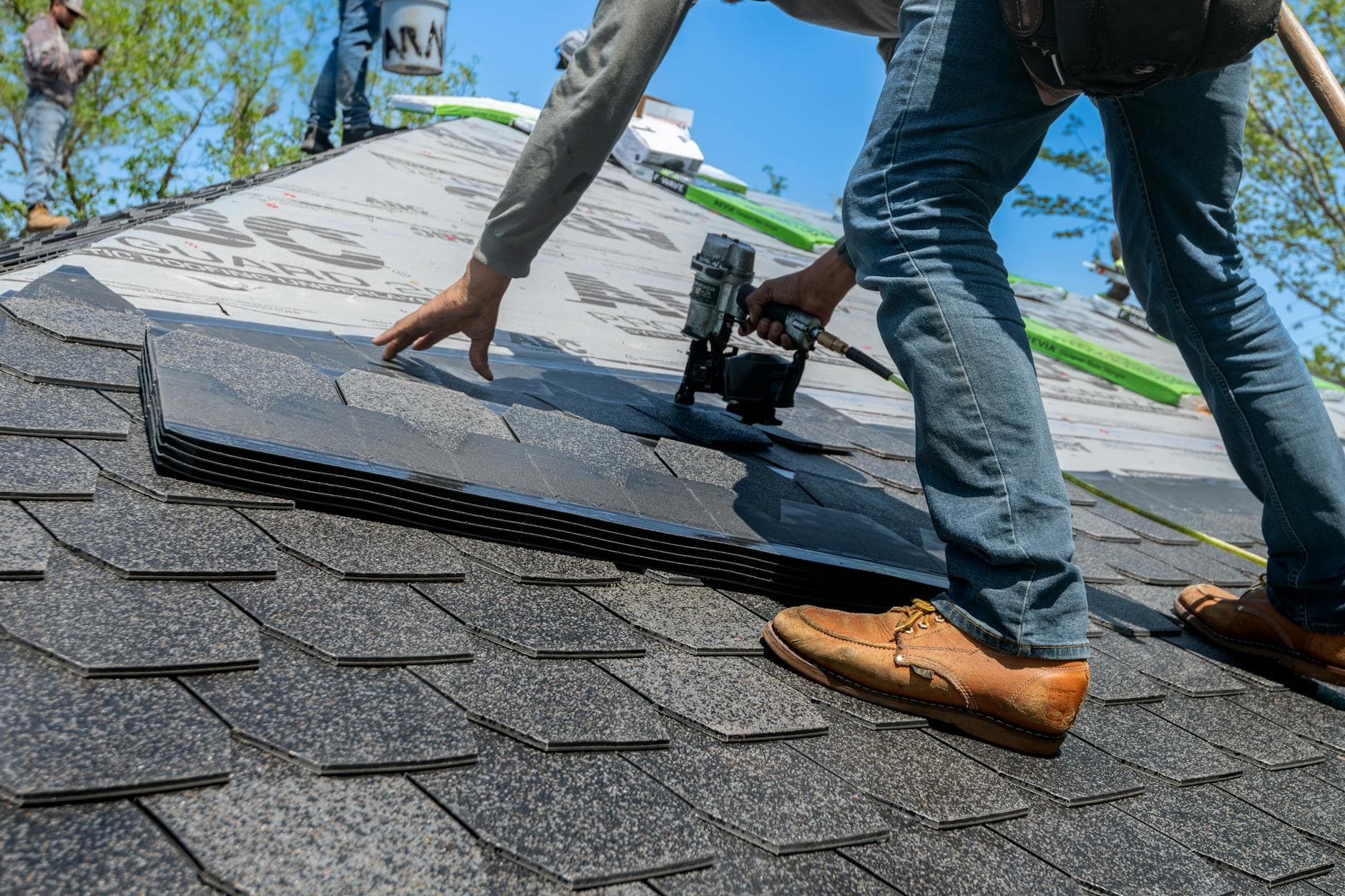
Full roof replacement for asphalt shingle, metal, tile, or flat systems: tear-off, decking inspection, underlayment, and new covering installed by a local crew.
Profile your project with our decision tool, get a tailored checklist, and talk to local roofers in your area.
Roof replacement is a full tear-off and re-install, typically every 20 to 40 years depending on material and climate. We connect U.S. homeowners to a roofer in our network who handles replacement work, by phone.
A full roof replacement is a 25–50 year decision, not a quote-shopping exercise
Roof replacement covers the entire envelope: tear-off down to the deck, decking inspection and repair, underlayment, flashing, ventilation, and new covering. Material choice drives lifespan from 20 years for entry-level asphalt to 75+ years for slate or copper, so the decision sits at the intersection of building science, climate, insurance, and resale economics. We help homeowners profile the project, ask the right questions, and meet local roofers in our network who specialize in the material and complexity their roof actually needs. Talk to screened replacement pros, or work through this overview first if you want to walk into the conversation already informed.
When replacement is the right call versus repair
The repair-vs-replace decision hinges on damage scope, current age relative to expected lifespan, deck condition, and the lifecycle math. As a working framework:
- Replace if damage exceeds roughly 25% of the roof field, multiple slopes show end-of-life signs, the deck has rot or deflection, or the roof is past 80% of its expected lifespan with a reasonable probability of a major weather event in the next 5–10 years.
- Repair if damage is localized, the underlayment is sound, and the roof has more than 30% of expected life remaining.
- Plan ahead on material selection, contractor screening, and financing once a roof reaches 70% of its expected lifespan, even if it has no current issues. Replacing on your timeline is always less stressful than replacing during an active leak or right after a storm.
For a structured walkthrough of the decision math, see our is it cheaper to repair or replace a roof guide. For an interactive estimate of remaining life, run the roof lifespan estimator.
Materials and options
Material choice drives 50–70% of the lifecycle outcome. The tradeoffs:
Architectural asphalt shingle
The default U.S. residential roof material: roughly 75–80% of new installs nationally per NRCA market data. Lifespan: 25–40 years for architectural / dimensional shingles, 30–50 years for premium designer or impact-rated. The category dominates because of strong wind ratings (most products carry Class H / 130-mph), broad availability, and homeowner familiarity. Class 4 impact-rated variants (UL 2218 tested) are the right floor in any hail-belt market and are eligible for carrier-issued hail-deductible discounts.
Standing-seam metal
Lifespan 40–70 years for properly installed Galvalume or aluminum panels with a quality coating system. The seam profile sheds water, panels handle thermal expansion, and most coatings carry 30-year fade-and-chalk warranties. Stronger wind, fire, and hail performance than asphalt. The lifecycle math typically beats asphalt on stay-forever homes; the upfront-cost gap rarely pays back inside a 7-year ownership window. See our asphalt vs metal roof comparison guide for the structured tradeoff.
Clay and concrete tile
Lifespan 50–100+ years for the tile itself; the underlayment beneath only lasts 25–40, so a "lift and relay" is part of the long-term plan. Tile is the right call where the structure is rated for the dead load and where regional aesthetic and HOA covenants prefer it, common in Southern California, parts of Arizona, parts of Florida, and selected master-planned Texas suburbs.
Slate and synthetic slate
Lifespan 75–150+ years for hard slate, 75–100 for soft slate, 40–60 for synthetic. Heavy, brittle, and unforgiving of foot traffic. Repairs require a slater, not a general roofer. Right call on historic homes and high-end custom builds; rare on tract housing.
Flat / low-slope membrane (TPO, EPDM, PVC, modified bitumen)
Lifespan 20–30 years depending on system and exposure. Used on flat or low-slope sections of otherwise pitched houses (porches, additions, mid-century homes) and on townhouse, brownstone, and small multi-family roofs. See our flat roofing service overview for the system-level comparison.
The right material for your specific situation depends on climate zone, roof geometry, structural capacity, and ownership horizon. Run the roofing materials comparison tool for a structured walkthrough.
What drives the cost of a replacement
We don't publish dollar amounts on this page. Local labor, local material availability, and your specific roof drive the number, and only a contractor on your roof can give you the right one. What we can tell you is the variables that move the cost up or down so you walk into quotes already understanding why estimates vary.
- Square footage and roof complexity. Pitched-roof area is measured in "squares" (100 sq ft each). A simple gable-and-hip roof on a ranch is the budget tier per square; cut-up roofs with multiple dormers, valleys, and pitch transitions cost meaningfully more because of cut waste and labor time.
- Pitch and accessibility. Steep pitches above 8/12 require fall-protection rigging and slow installs; walkable 4/12–6/12 pitches are the labor sweet spot.
- Material grade. Within asphalt: 3-tab is the budget grade, architectural mid-range, designer/impact-rated highest. Across categories: asphalt < metal exposed-fastener < standing-seam metal < tile < slate.
- Tear-off complexity. A single-layer tear-off down to good decking is the baseline. Multi-layer tear-offs (most U.S. codes cap at two existing layers) and decking replacement add cost.
- Underlayment, ventilation, and flashing scope. Full ice-and-water shield, balanced ridge-and-soffit ventilation, and full flashing replacement at chimneys and walls are not always included in low bids. Confirm they are in yours.
- Local labor rates and permit fees. Vary widely by metro and even by city within a metro. Coastal and hurricane-zone work also carries inspection-coordination cost.
- Climate-driven specs. Hail-belt: Class 4 impact-rated. Hurricane coast: Class H wind rating, ring-shank deck nailing pattern, sealed deck membrane. Cold-snow: 24" ice-and-water shield inside the warm wall.
The honest comparison method is to get multiple quotes from screened local pros on the same scope and compare line by line. Talk to replacement specialists. We route by ZIP and project complexity, and most network contractors include the written estimate with their quote.
Insurance, warranties, and what to verify before signing
- Warranties. Manufacturer warranties on shingles commonly read "limited lifetime" but pro-rate aggressively after 10 years and exclude wind, hail, and improper install. The workmanship warranty from the contractor (typically 2–10 years) is the one that actually pays for callbacks. Get both warranty documents before signing.
- Insurance and licensing. Verify a one-million-dollar-or-higher general liability and current workers' comp before the contractor steps on your roof. A workers' comp lapse during a fall on your property exposes you personally.
- Permits. Almost every U.S. municipality requires a residential roofing permit for tear-off and reroof. Permits include mid-progress inspection. The contractor pulls; you verify it was actually pulled.
- Insurance-claim work. If the project is paid through a homeowner's insurance claim, see our guide on does insurance cover roof replacement for the full filing-to-payment process. Carrier scope of loss almost never matches the contractor scope on first pass. Supplements are normal.
How our network screens replacement contractors
Every contractor in our network for roof replacement work clears: license verification (where the state or municipality issues one), a one-million-dollar-or-higher general liability proof, current workers' comp, manufacturer-installer credentials for at least one major brand (GAF Master Elite, CertainTeed SELECT ShingleMaster, Owens Corning Platinum, or equivalent), background-check documentation, and a 4.0+ aggregated review-score floor across the public review platforms.
FAQ
How long does a full roof replacement take?
Most single-family asphalt-shingle replacements finish in 1–3 days for typical 20–30 square roofs in moderate weather. Tile and standing-seam metal can extend to a week. Steep pitches, complex cut-up roofs, and weather delays add days. Insist on a tarped overnight if the work spans more than one day and rain is in the forecast.
Can I replace just half the roof?
Technically possible, rarely advisable. Half-roof replacements cause aesthetic mismatch (new shingles never match weathered ones cleanly), complicate flashing transitions at the ridge, and often void the manufacturer workmanship warranty which requires whole-roof replacement to apply. The exception is dual-pitched additions where the front and rear roofs are clearly separate sections.
Should I tear off the old roof or layer over it?
Tear off in almost every case. Most U.S. codes allow up to two layers, but layering hides decking issues, voids most warranties, adds dead load the structure may not be rated for, and shortens the second roof's life through trapped heat. A single-layer tear-off down to clean decking is the right baseline for a quality replacement.
What's the difference between a manufacturer warranty and a workmanship warranty?
The manufacturer warranty covers the materials (shingle integrity, granule retention, lamination) and pro-rates aggressively after the first 10 years. The workmanship warranty from your contractor covers install errors that cause leaks or premature failure, typically for 2–10 years. The workmanship warranty is the one that pays for the callback when a flashing leak shows up in year three.
Do I need permits for a like-for-like replacement?
Almost always yes. Most municipalities require a permit for any tear-off and reroof project, even like-for-like. The permit fee is small relative to the job; skipping it creates resale-disclosure problems and can void your homeowner's insurance if a leak claim later traces to unpermitted work. A legitimate contractor pulls the permit as a matter of course.
How fast does the qualifier connect me by phone with a replacement contractor?
Typical match time is under 60 seconds via the qualifier on this page. First contractor contact is by live phone transfer when an agent is on call, or callback as fast as an hour. For homeowners with active leaks who need an emergency tarp before the full replacement starts, we route to rapid-availability pros first.
Roof Replacement pros by city
We connect homeowners with local roofers across 49 metro areas.
- Roof Replacement in Atlanta, GA
- Roof Replacement in Charlotte, NC
- Roof Replacement in Cheyenne, WY
- Roof Replacement in Chicago, IL
- Roof Replacement in Cincinnati, OH
- Roof Replacement in Columbus, OH
- Roof Replacement in Dallas, TX
- Roof Replacement in Denver, CO
- Roof Replacement in Fontana, CA
- Roof Replacement in Houston, TX
- Roof Replacement in Indianapolis, IN
- Roof Replacement in Lancaster, CA
- Roof Replacement in Las Vegas, NV
- Roof Replacement in Loveland, CO
- Roof Replacement in Memphis, TN
- Roof Replacement in Miami, FL
- Roof Replacement in Nashville, TN
- Roof Replacement in Oklahoma City, OK
- Roof Replacement in Palmdale, CA
- Roof Replacement in Philadelphia, PA
- Roof Replacement in Phoenix, AZ
- Roof Replacement in Pittsburgh, PA
- Roof Replacement in Sacramento, CA
- Roof Replacement in Salt Lake City, UT
- Roof Replacement in San Antonio, TX
- Roof Replacement in San Bernardino, CA
- Roof Replacement in Tampa, FL
Related reading
Recent roof replacement coverage from our editorial team.
Wind vs. Hail Damage Claims: How Insurers Distinguish Them and Why It Matters for Your Roof Coverage
Adjusters distinguish wind (creased shingles, missing tabs, ridge cap separation) from hail (circular bruises with granule loss, dimples in soft metals) using different evidence, and the difference often triggers a separate, higher percentage-of-dwelling deductible. Document with NOAA Storm Events data, a licensed roofer's report, and dated photos before any tarp.
Does a New Roof Increase Home Resale Value? What Appraisers Actually Credit in 2026
Asphalt roof replacement recovers about 56 to 68 percent of cost at resale on average, but the appraisal credit is only one of three transaction effects. Faster sales, inspection-objection avoidance, and FHA/VA financing eligibility frequently make replacement worth it even when Cost vs Value math looks unflattering.
Asphalt Shingle Lifespan by Climate: Why Houston, Phoenix, and Minneapolis Roofs Age Differently
Architectural asphalt shingles run 25 to 40 years per the spec sheet, but realistic field life is 18 to 25 years in hot-humid climates, 17 to 24 in hot-dry, 22 to 32 in cold-snow, and 16 to 22 in coastal. Hail belts short-circuit the question: Class 4 impact-rated shingles are the decision-quality move there.
When Is the Right Time to Replace Your Roof? Why Spring and Fall Beat Summer and Winter
Spring (April-June) and fall (mid-September-October) are the recommended windows: 50s-70s temperatures clean-activate sealant strips, and lead times are shorter than summer's peak. Summer scuffs hot shingles and runs 6-10 week lead times; winter requires hand-sealing below 40 degrees F.
Related services
Talk to a roofer in our network
Talk to a roofer who handles roof replacement. Pre-screen first, then we connect you by phone.
Under a minute. One local pro, not 12.
Lead-routing service. Calls may be recorded.