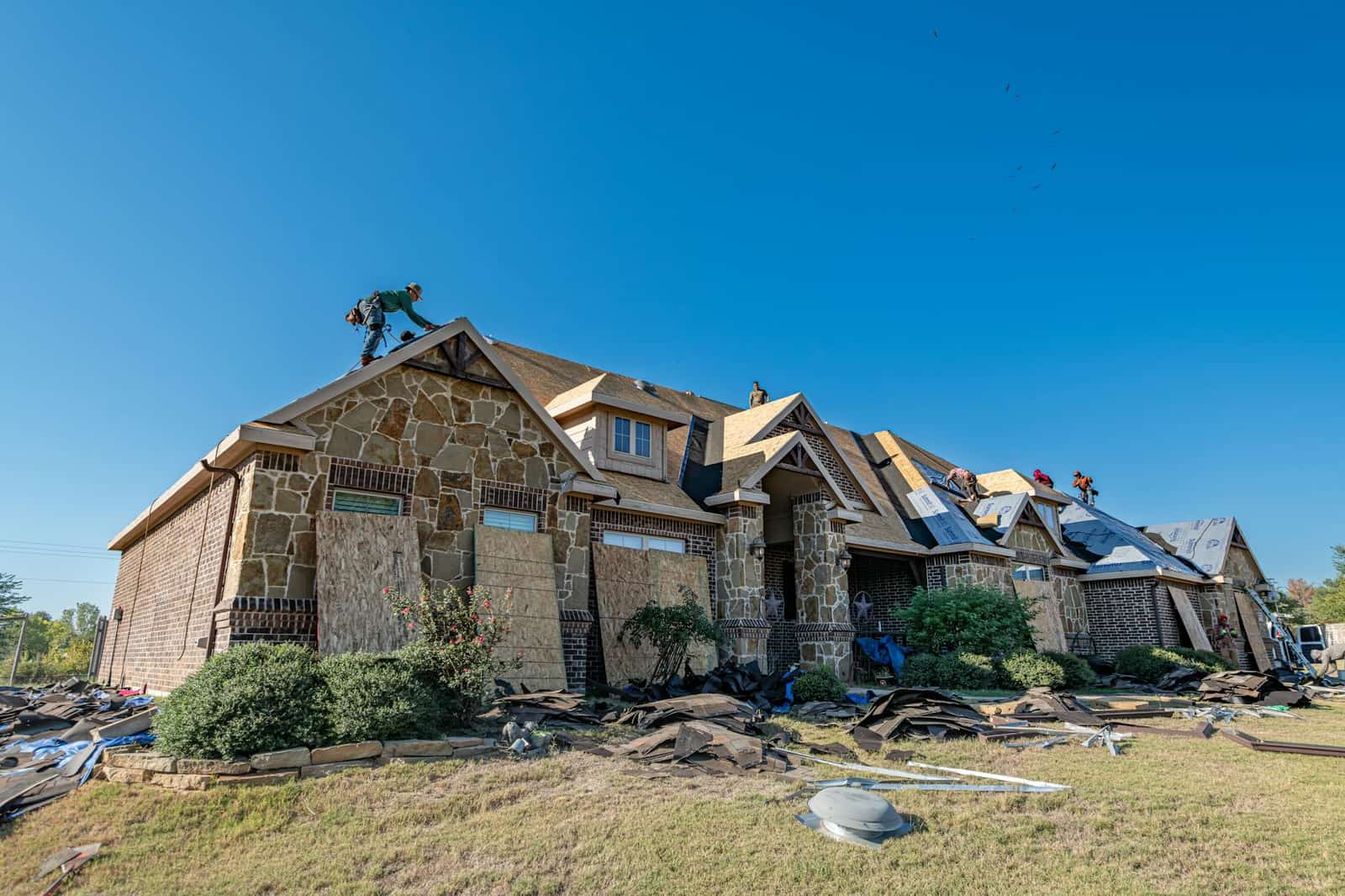
Atlanta, GA
Roof Repair in Atlanta, GA: Get a Local Repair Quote
Targeted repairs for leaks, missing shingles, flashing failure, and minor storm damage, with fast turnaround from local contractors in our network.
Atlanta roofs face high-humidity asphalt acceleration, hail spikes in spring storm season, and pine-needle gutter loading.
Tell us what's wrong and we'll line up Atlanta repair specialists who handle your exact scope.
Roof repair in Atlanta, GA is a local-code, local-climate, and local-labor-market decision. We connect Atlanta homeowners to a roofer in our network who handles your scope and timeline, by phone.
Roof repair in Atlanta is a tree-damage, wind-loss, and humid-climate decision
A metro Atlanta roof repair sits at the intersection of three local conditions most generic repair scopes ignore. The metro's dense oak-and-pine canopy across DeKalb, Fulton, and the intown neighborhoods drives more tree-impact and limb-strike claims than wind-uplift claims, unlike DFW or Houston. The humid summer climate accelerates algae growth and degrades shaded north-facing slopes faster than the published asphalt warranty. And the Storm Prediction Center hail climatology puts the metro inside the southeastern severe-storm belt, with 1–3 hail or microburst events per year that can drive claim-worthy damage.
If you have an active leak, tree-strike damage from any recent storm, or visible shingle loss after a wind event, talk to screened Atlanta repair pros — most network contractors offer a written inspection and a no-obligation scope.
What actually drives metro Atlanta roof repairs
Four failure modes account for the bulk of repair work:
- Tree-strike and limb impact. This is the dominant repair driver in Atlanta, unlike most other Sunbelt metros. Mature oak and pine canopies across Buckhead, Druid Hills, Decatur, Inman Park, and Grant Park drop large limbs in every major wind event. Tree-impact damage typically routes under the all-perils deductible on a Georgia HO-3 policy, not the wind-and-hail deductible — that distinction can save thousands depending on the policy structure.
- Wind uplift and ridge-cap loss. Severe thunderstorms across the metro produce 50–70 mph gusts on a regular basis, with occasional 80+ mph microbursts. Ridge caps, hip caps, and the first three courses below the eave are the textbook failure points. Older 1990s–2000s installs commonly used four-nail patterns that fail at higher rates than the six-nail high-wind specification.
- Flashing degradation. Step flashing along brick chimneys, skylights, and roof-to-wall transitions is the second-largest leak source on metro Atlanta homes 8+ years old. The humid summer climate accelerates oxidation; the cold-snap winters create thermal cycling that breaks the seal earlier than drier climates would.
- Algae streaks and moss buildup. Persistent shading from the tree canopy drives moss and algae growth on north-facing slopes. Cosmetically ugly, but functionally the bigger issue is moisture retention beneath the colony, which accelerates granule loss and shortens shingle life. Repairs that don't address algae return as bigger repairs inside two years.
The right repair scope depends on which combination of these is at play.
When to repair vs. when to replace in Atlanta
For most metro Atlanta roofs, the decision turns on damage extent and roof age:
- Roof under 12 years old, single-slope wind or tree-strike damage, no moss or significant algae: targeted repair plus a walkthrough of the rest of the roof field for adjacent damage. Tree-strike claims often go cleanly when the storm date is documented and the impact is photographed before cleanup.
- Roof 12–18 years old, multi-slope damage, isolated flashing leaks: full repair scope addressing flashing, decking spot-replacement where moisture is present, and shingle work on affected slopes.
- Roof past 15 years with significant moss colonies, algae streaks, and multiple leak points: replacement is usually the better call. See our Atlanta roof replacement page and our is it cheaper to repair or replace a roof guide.
For tree-strike damage specifically: document with date-stamped photos before the tree or limb is removed, get a written cause-of-loss report from the inspecting roofer, and file the claim under the right deductible category. The Georgia Office of Commissioner of Insurance consumer page is the right escalation path if the carrier classifies the loss incorrectly.
Atlanta-specific repair scope items
Five items separate a quality Atlanta repair from a generic patch:
- Tree-canopy management before the work. Any reputable Atlanta repair scope starts with a walkthrough of overhanging limbs near the repair area. Branches within 6 feet of the repair zone should be pruned before re-shingling so the new install doesn't immediately face the same impact risk that drove the original damage.
- Algae-resistant shingle matching. When replacing shingles on north-facing slopes, the replacement product should carry copper or zinc-strip algae resistance (often labeled "AR" or "StreakGuard"). Matching the original product preserves the warranty; upgrading the replacement section to AR-rated stock is a reasonable defense against return claims.
- Flashing replacement, not bend-back. Step flashing along chimneys, skylights, and roof-to-wall transitions should be replaced with new metal, not bent back into position. Atlanta's humid climate eats the seal on bent-back flashing inside one rainy season.
- Decking moisture check. Older Decatur, Inman Park, and Grant Park homes can have plank decking with localized moisture damage around the failure point. A moisture meter should run on the exposed deck before the underlayment goes back down — drying time is part of the scope, not an upcharge.
- Permits. The City of Atlanta requires a residential repair permit for repairs above a defined scope (typically structural work or replacement of a substantial percentage of the roof field). DeKalb, Fulton, Cobb, Gwinnett, and Cherokee counties enforce parallel requirements through their respective building departments.
Neighborhoods where repair calls cluster
Demand patterns vary across metro Atlanta:
- Buckhead, Brookhaven, and Druid Hills — older asphalt and slate roofs with heavy tree canopy. Repair scopes routinely include tree-strike damage and chimney-flashing work on brick chimneys common in the architecture.
- Decatur, Inman Park, Grant Park, and East Atlanta — bungalows and craftsman homes with steep pitches and plank decking. Typical repair: flashing replacement plus partial-slope shingle work with decking spot-check.
- Sandy Springs, Roswell, and Alpharetta — 1990s–2010s asphalt across master-planned subdivisions, more hail and wind exposure than the intown core. Class 4 product matching is common here when carrier discounts are in play.
- Marietta, Smyrna, and Vinings — mixed mid-century and 1980s housing stock. Ventilation-rebuild repairs are common alongside the visible damage scope.
- Lawrenceville, Duluth, and Suwanee — younger asphalt across Gwinnett growth corridors. Builder-grade three-tab shingles installed 10–15 years ago often present at end of life on the repair-vs-replace decision.
Insurance and repair in Georgia
Most Georgia HO-3 policies require prompt notice of loss within carrier-specific windows (often 30–90 days) and impose a two-year suit limitation from the date of loss. The Georgia Office of Commissioner of Insurance publishes consumer guidance on filing roof-damage claims.
For tree-strike claims specifically, the loss typically routes under the all-other-perils deductible rather than the wind-and-hail deductible. That distinction matters because wind-and-hail deductibles on Georgia HO-3 policies are often a percentage of Coverage A while all-other-perils is a flat dollar amount, and the flat is usually lower. Document the tree strike with date-stamped photos before cleanup begins.
Georgia includes appraisal-clause language in most HO-3 policies. Each side picks an independent appraiser, the two appraisers select a neutral umpire, and the panel determines the loss amount — binding on amount (not coverage), faster than litigation, and the right venue when a documented Haag-cert inspection meaningfully exceeds the carrier scope.
See our guides on does insurance cover roof replacement, the insurance adjuster meeting checklist, and ACV vs RCV settlement math for the full claim sequence.
What to expect from a network match
Every Atlanta contractor in our network carries an active Georgia state roofing license where applicable to the work scope, general liability insurance, and a clean background check before any homeowner lead reaches them. We ask network partners to re-confirm license and insurance annually. Match flow: tell us about your project, we route to up to three Atlanta-area pros who specialize in the repair type and damage profile you have, and you collect written scopes before deciding. See our Atlanta city hub for the full local match context, our Atlanta roof replacement page if your situation is heading toward full replacement, and our editorial policy for sourcing standards.
Neighborhoods we serve
- Buckhead
- Midtown
- Decatur
- Sandy Springs
- Marietta
- Alpharetta
- Roswell
- Dunwoody
Other services in Atlanta
Roof Replacement in Atlanta
Roof Replacement from local Atlanta pros.
Storm Damage in Atlanta
Storm Damage from local Atlanta pros.
Flat Roofing in Atlanta
Flat Roofing from local Atlanta pros.
Metal Roofing in Atlanta
Metal Roofing from local Atlanta pros.
Roof Inspection in Atlanta
Roof Inspection from local Atlanta pros.
Roof Repair in nearby cities
Related guides and tools
Talk to local roof repair pros in Atlanta
Talk to a Atlanta roof repair pro who handles full and partial replacements.
Under a minute. One local pro, not 12.
Lead-routing service. Calls may be recorded.