Denver, CO
Roof Replacement in Denver, CO: Talk to Local Pros Today
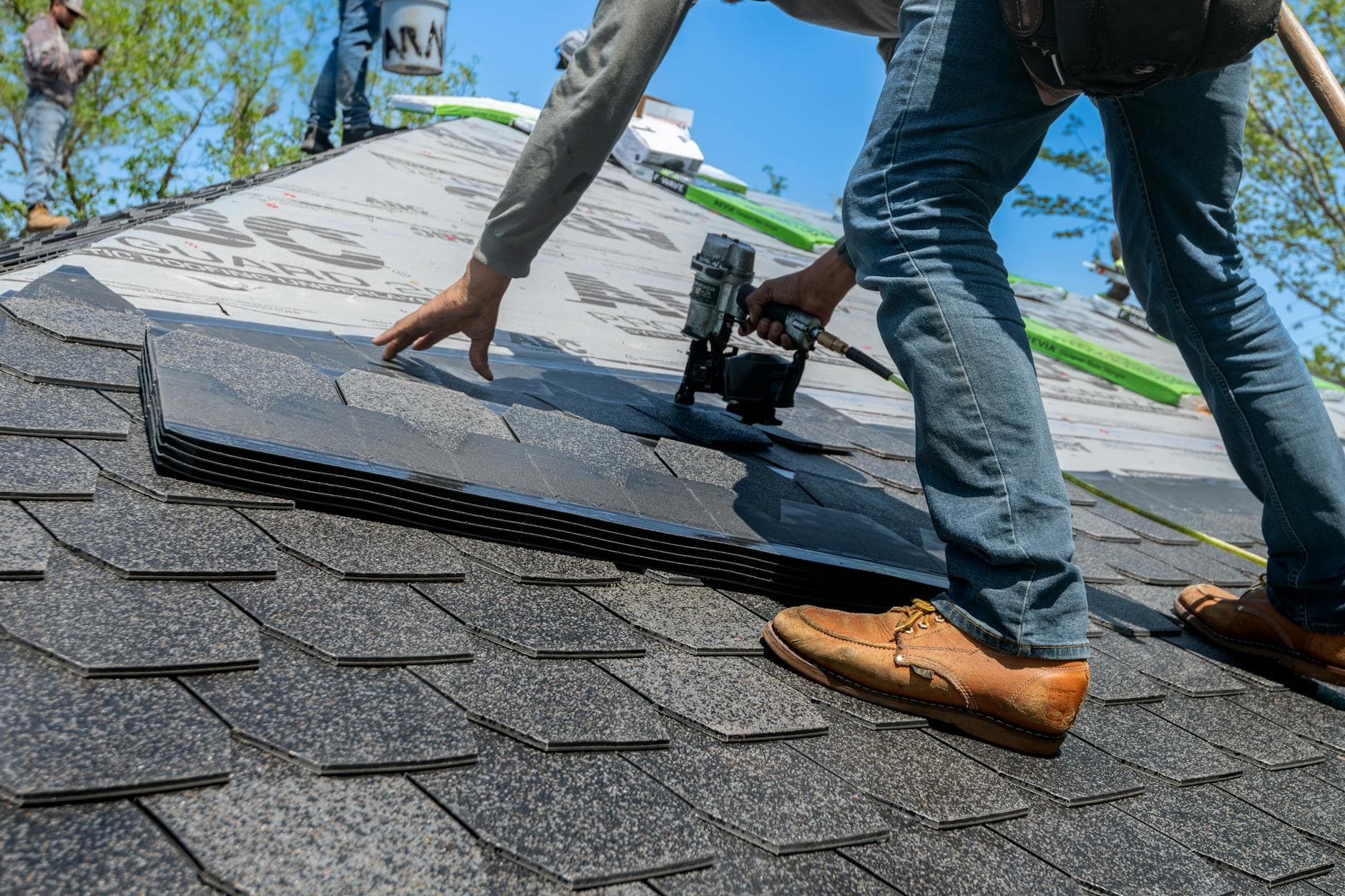
Full roof replacement for asphalt shingle, metal, tile, or flat systems: tear-off, decking inspection, underlayment, and new covering installed by a local crew.
Front Range roofs face the worst hail exposure in the Lower 48. NOAA logs 3 to 4 severe hail days per year along this corridor.
Profile your project, get a tailored checklist, and meet Denver pros who specialize in your exact scope.
Roof replacement in Denver, CO is a local-code, local-climate, and local-labor-market decision. We connect Denver homeowners to a roofer in our network who handles your scope and timeline, by phone.
Roof replacement in Denver is a hail-belt, high-UV, and Class-4 decision
Replacing a roof in metro Denver is unlike a generic asphalt-shingle job anywhere outside the Front Range. The metro sits inside what insurers call "hail alley." NOAA Storm Prediction Center climatology and NOAA Storm Events Database records show metro Denver near the top of the country for annual frequency of 1-inch and larger hail, with single events across Aurora, Centennial, Highlands Ranch, and Lakewood that have triggered tens of thousands of carrier claims in a single afternoon. The May 8, 2017 event remains one of the costliest hailstorms in Colorado history. Layer that on top of one of the highest-UV climates of any major U.S. metro and a thin atmospheric column at roughly 5,280 feet of elevation, and the asphalt-shingle math shifts hard.
The dominant Denver question is not "what shingle?" It is "what Class 4, what wind rating, and what install spec for our hail and UV load?" A generic 110-mph three-tab shingle is a financial mistake in this market.
If your Denver-area roof is past 12 years old, has lost shingles or shown granule loss after any hail event since 2023, or hasn't been inspected since the most recent severe-storm season, talk to screened Front Range replacement pros. Most network contractors offer a written inspection plus a no-obligation replacement scope.
Why Front Range roofs wear out
Four local conditions compress the useful life of an unspecified asphalt roof in metro Denver:
- Hail frequency. This is the dominant variable. Per the Rocky Mountain Insurance Information Association, Colorado sits in the top five states for hail-related insurance claims annually, with most of the volume concentrated along the Front Range from Fort Collins through Colorado Springs. The metro records multiple 1-inch-plus events per year, with major hail outbreaks (2-inch-plus) running every two to four years across some part of the metro.
- High-altitude UV and thermal cycling. Denver receives more high-UV days per year than nearly any other major U.S. metro, and the thin atmosphere at 5,280 feet of elevation amplifies the load. Sustained UV degrades the asphalt mat and the granule layer faster than at lower elevations. NRCA technical guidance routinely documents a 10 to 20 percent lifespan haircut on under-protected asphalt installs in this climate band.
- Diurnal thermal swing. Daytime-to-nighttime temperature shifts of 30 to 50 degrees are common year-round and stress every seam, lap, and fastener. The repeated expansion and contraction is harder on a roof than a similar number of warm-summer days at sea level.
- Wind events. The Front Range sees frequent 50 to 80 mph straight-line wind events year-round, particularly during the spring transition season and the dry-warm Chinook periods. Six-nail patterns and ring-shank deck nailing are the right install spec; four-nail "builder grade" patterns fail under Front Range wind loads at rates that justify the upgrade.
The combined effect: a generic 110-mph architectural asphalt roof in metro Denver commonly hits 12 to 17 years of useful life. Sometimes much less if a single hail event totals it earlier. A Class 4 impact-rated install with a Class H (130-mph) wind rating, full ventilation upgrade, and six-nail pattern routinely reaches 22 to 30+.
Material recommendations for Denver roofs
For the typical Front Range single-family home — asphalt-shingled, 4/12 to 10/12 pitch, suburban or master-planned — the right replacement spec is a Class 4 (UL 2218) impact-rated, Class H (130-mph) wind-rated architectural asphalt shingle with sealed-deck synthetic underlayment, ice-and-water shield in valleys and around penetrations, ring-shank deck nailing, and balanced soffit-and-ridge ventilation. Major brands meeting that spec are GAF Timberline AS II, CertainTeed Landmark Class IV, and Owens Corning Duration Storm. Many Colorado carriers offer a hail-resistance premium credit or reduced hail deductible on documented Class 4 installs; ask your agent for the exact endorsement language before signing. The Colorado Division of Insurance publishes consumer guidance on the hail-discount endorsements available in the state.
For homeowners staying 15+ years in stay-forever neighborhoods (Cherry Creek, parts of the Highlands, Boulder, Evergreen), standing-seam Galvalume metal is the longer-lifecycle play and increasingly common on modern-architecture renovations. The 40 to 70 year lifespan paired with the strongest hail and wind performance in any residential roofing material wins on the math for any hold past one full claim cycle. Stone-coated steel delivers a similar performance envelope with the look of an architectural shingle, and many Front Range HOAs that bar exposed-fastener metal allow it. See our asphalt vs metal roof guide for the structured tradeoff.
For Denver and Boulder homes inside the Wildland-Urban Interface (WUI) where Colorado State Forest Service mapping shows elevated wildfire risk, Class A fire-rated roof assembly is the right call. Wood shake replacement with Class A asphalt, metal, or tile is increasingly mandated by local jurisdictions in foothills neighborhoods.
Denver-specific install requirements
Five items separate a quality Denver replacement from a generic one:
- Class 4 baseline. As above. Anything less is a financial mistake in this market. Verify the carrier-specific endorsement language for the hail-resistance discount before signing.
- Permits. The City and County of Denver Community Planning and Development requires a residential roofing permit for tear-off and re-roof projects, with required inspections during the work. Aurora, Lakewood, Arvada, Westminster, Thornton, Centennial, Highlands Ranch, Boulder, and the rest of the Front Range cities enforce parallel rules through their respective building departments. No legitimate Denver roofer skips this.
- Six-nail pattern with ring-shank deck nails. This is the published install pattern from every major shingle manufacturer's high-wind warranty and the only one that survives Front Range wind events without uplift. Confirm it appears in your written scope, not just "manufacturer specification."
- Ventilation upgrade. Most Denver roofs over 12 years old are under-ventilated for the high-UV, high-thermal-cycle climate. A full replacement is the right moment to install balanced soffit intake and continuous ridge exhaust, sized to the attic volume per IRC R806. The upgrade adds modest cost and 5 to 8 years to effective lifespan.
- Decking inspection. Older Wash Park, Park Hill, and Berkeley homes often carry plank decking with degraded fastener pull strength. The contractor should plan to overlay 7/16" OSB or replace planks where the moisture meter trips or where the gap geometry fails the shingle nailing spec.
Neighborhoods we replace roofs in
Demand patterns vary across the Front Range:
- Cherry Creek, Wash Park, and Park Hill — older asphalt roofs on mid-century and early-1900s homes, often with plank decking and stay-forever holds. Standing-seam metal gaining share on architecturally significant renovations.
- LoDo, Highlands, Berkeley, and RiNo — converted-warehouse stock and modern-architecture infill. Mix of low-slope membrane work (TPO, modified bitumen) on flat sections plus standing-seam metal on pitched modern builds.
- Aurora, Centennial, Highlands Ranch, and Lone Tree — 1990s through 2010s asphalt roofs across master-planned communities, many hitting end of life now. Typical replacement: 25 to 40 sq Class 4 architectural with carrier hail-deductible discount paperwork and ventilation rebuild.
- Lakewood, Arvada, and Wheat Ridge — mixed 1970s through 2000s housing stock with heavy hail exposure across the west-metro band. Class 4 is the floor; many homeowners upgrade to stone-coated steel on the second replacement.
- Boulder, Louisville, and Lafayette — younger asphalt across Boulder County growth corridors, plus historic Boulder cottages with steeper pitches. WUI fire-rating considerations apply on foothills lots.
- Littleton, Castle Rock, and Parker — fast-growing south-metro housing with the heaviest hail exposure in the metro on the Palmer Divide. Six-nail pattern non-negotiable here.
Insurance and roof replacement in Colorado
Colorado is one of the most active hail-claim states in the country. The Colorado Division of Insurance publishes consumer guidance on hail-damage claims, and Senate Bill 23-184 in 2023 added consumer protections around hail-deductible disclosures and contractor practices. Most Colorado HO-3 policies impose a 12 to 24 month suit-limitation period from the date of loss; notice-of-loss windows are typically 30 to 60 days. The state-level hail-resistant roofing endorsement most major carriers file gives Class 4 installs a documented premium credit or reduced wind-and-hail deductible.
Colorado law also includes contractor-conduct rules under the Colorado Roofing Bill (Senate Bill 12-038) that require written contracts, prohibit deductible-rebate offers, and let homeowners cancel within 72 hours of carrier denial. Confirm any contractor proposal complies with these requirements before signing.
See our guides on does insurance cover roof replacement, roof insurance claim deadlines by state, and ACV vs RCV settlement math for the full claim sequence. If you have visible damage from a 2024 through 2026 storm event, our network includes Front Range contractors experienced in carrier negotiations and the Colorado appraisal-clause process.
What to expect from a network match
Network contractors are asked for license, COI, and background check at signup, and we ask partners to re-confirm those annually. Match flow: tell us about your project, we route the lead to up to three Front Range pros who specialize in your material and damage profile, and you collect written quotes on the same scope before deciding. See our Denver city hub for the full local match context, and our editorial policy for the sourcing standard behind this page.
Neighborhoods we serve
- Cherry Creek
- LoDo
- Highlands
- Aurora
- Lakewood
- Centennial
- Boulder
- Littleton
Other services in Denver
Roof Replacement in nearby cities
Related guides and tools
Talk to local roof replacement pros in Denver
Talk to a Denver roof replacement pro who handles full and partial replacements.
Under a minute. One local pro, not 12.
Lead-routing service. Calls may be recorded.