Loveland, CO
Roof Replacement in Loveland, CO: Talk to Local Pros Today
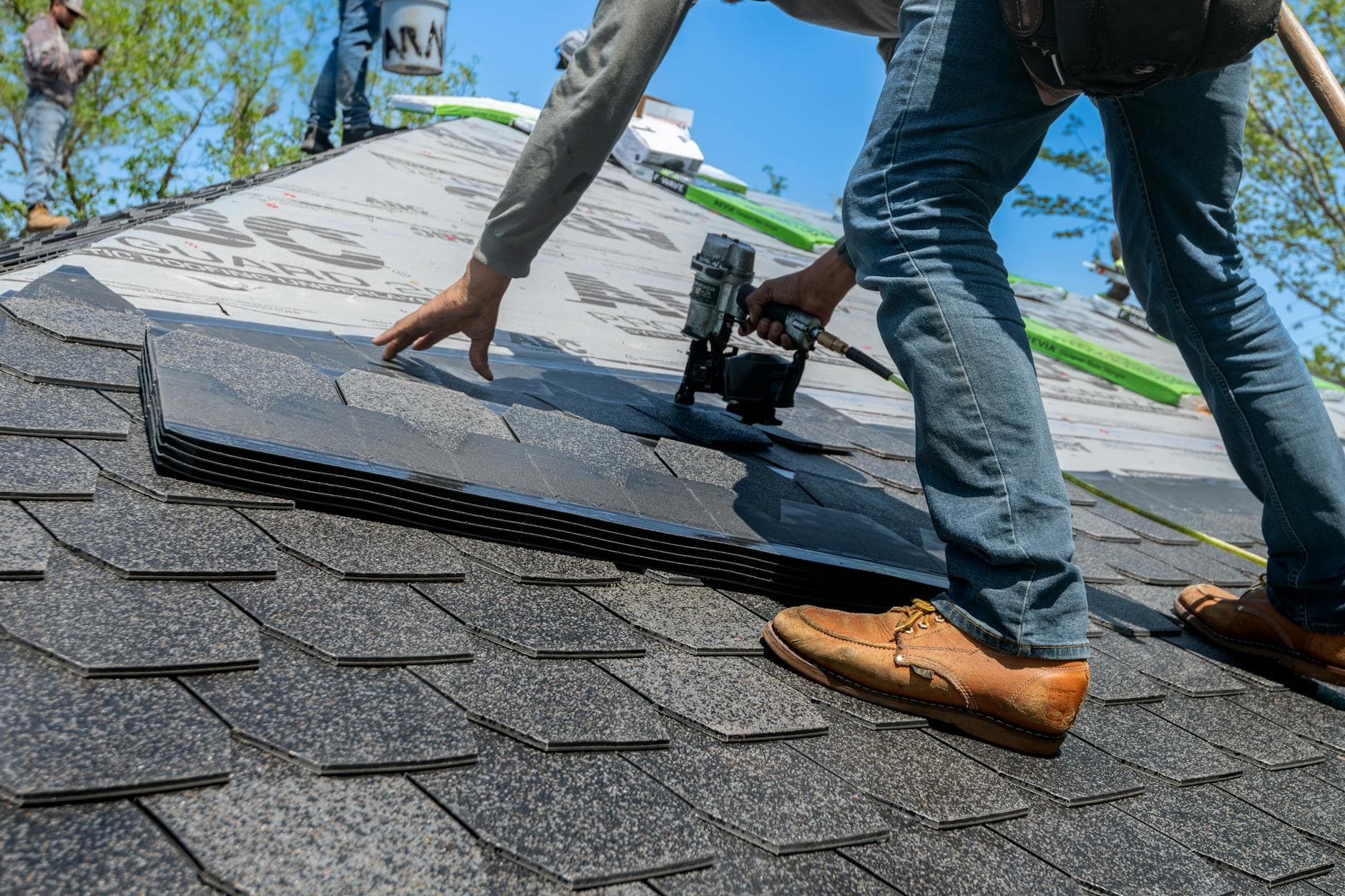
Full roof replacement for asphalt shingle, metal, tile, or flat systems: tear-off, decking inspection, underlayment, and new covering installed by a local crew.
Northern Front Range roofs face severe hail seasons. NOAA logs more Class 4 hail events here than anywhere in the Mountain West.
Profile your project, get a tailored checklist, and meet Loveland pros who specialize in your exact scope.
Roof replacement in Loveland, CO is a local-code, local-climate, and local-labor-market decision. We connect Loveland homeowners to a roofer in our network who handles your scope and timeline, by phone.
The 3 reasons Loveland roofs fail early: hail, altitude UV, freeze-thaw, and the spec that adds 10 years
Replacing a roof in Loveland is not a generic asphalt-shingle job. The metro sits inside the densest hail corridor outside north Texas and Oklahoma per Insurance Institute for Business and Home Safety (IBHS) claim data, with Larimer and Weld counties absorbing more 1-inch-plus hail events per year than nearly any comparable population pocket in the country. Layer on Loveland's roughly 4,982-foot elevation (which raises sustained UV exposure 20 to 25 percent over sea level per NOAA UV Index data) plus the Front Range freeze-thaw cycle that stresses asphalt bond at the keyway, and you have three local conditions that compress the published lifespan of an unspecified asphalt roof. Specifying the right material, the right install, and the right contractor for these conditions is the entire job.
If your Loveland roof is past 15 years old, has lost shingles in any wind event since the May 2024 derecho, or hasn't been inspected since the most recent significant hail season, talk to screened Loveland replacement pros. Most network contractors include a written inspection with their replacement quote and produce a no-obligation scope on the first visit.
Why Loveland roofs wear out faster
Three local conditions compress the lifespan of an unspecified asphalt roof in the Loveland metro:
- Hail dominance. The northern Front Range corridor records significantly more 1-inch-plus hail events per year than the U.S. average. Class 4 impact-rated shingles (UL 2218 or FM 4473 tested) are not a premium upgrade in Loveland. They are the baseline. Major Colorado carriers offer hail-deductible discounts of 20 to 35 percent on the dwelling portion of premium for documented Class 4 installs per Colorado Division of Insurance guidance, under Colorado HB22-1145. Material choice in Loveland is a hail conversation first.
- High-altitude UV. Loveland sits at roughly 4,982 feet of elevation. Combined with the dry mountain-edge climate, that produces some of the highest sustained UV exposure of any U.S. residential market. Per NRCA field studies, high-altitude asphalt shingles age faster than the same product at sea level. Asphalt without UV-stabilized formulations and properly balanced attic ventilation routinely shaves 15 percent off published lifespans.
- Freeze-thaw cycling. Loveland winters cycle between sub-zero overnight lows and 50-degree Chinook-warmed afternoons. Thermal cycling stresses asphalt shingle bond at the keyway. Full-eave ice-and-water shield underlayment is the single most important install detail for a Loveland asphalt roof.
The combined effect: a generic Class 3 architectural asphalt roof in Loveland commonly hits 15 to 22 years of useful life before a hail event totals it. A Class 4 impact-rated install with full ventilation upgrade hits 22 to 32. The product upcharge is small; the lifecycle delta is large.
Material recommendations for Loveland roofs
For most Loveland single-family homes, the right replacement spec is a Class 4 (UL 2218) impact-rated, 130-mph wind-rated architectural asphalt shingle with full balanced ventilation, ice-and-water shield at eaves and around penetrations, six-nail fastener pattern, and a synthetic underlayment. Major brands meeting that spec (GAF Timberline AS II, CertainTeed Landmark IR, Owens Corning Duration Storm) install at a small upcharge over standard architectural products in this market, often offset by the carrier discount within 4 to 7 years.
For homeowners staying 20-plus years, standing-seam Galvalume metal (40 to 70 year lifespan, superior hail and UV performance, modern reflective coating systems that drop attic temperatures meaningfully) is the longer-lifecycle choice and increasingly common on Old Town Loveland renovations and Mariana Butte custom builds. The upfront cost gap typically pays back inside a 12-year ownership window in this market because of the avoided hail-claim sequence. See our asphalt vs metal roof guide for the structured comparison.
For wildfire-zone parcels on the western edge of Larimer County (Estes Park corridor, western Berthoud), Class A fire-rated assemblies with vent screening on the WUI side are required by local code. Metal and tile both deliver Class A out of the box; asphalt requires the right underlayment to qualify.
Loveland-specific install requirements
Beyond the material spec, four install items are non-negotiable in this market:
- Permits. The City of Loveland Development Services requires a residential roofing permit for tear-off and reroof projects, with mid-progress inspection before the final layer goes on. Larimer County Building Services and Weld County run parallel processes for unincorporated parcels. Berthoud, Windsor, and Greeley each have their own permit portals. No legitimate Loveland roofer skips this.
- Ice-and-water shield. Code requires shield at eaves to 24 inches inside the warm-wall line. For Loveland's freeze-thaw cycling, extending shield up the full first 6 feet of the slope and around every penetration adds modest cost and meaningfully reduces ice-dam leak risk on north-facing slopes.
- Ventilation upgrade. Most Loveland roofs over 15 years old are under-ventilated for the local climate. A full replacement is the moment to install balanced soffit intake and continuous ridge exhaust, sized to the attic volume per Section R806 of the IRC. The ventilation upgrade adds 5 to 8 years to the new roof's effective life and qualifies the assembly for several manufacturers' extended warranties.
- Decking inspection. Older Old Town Loveland homes often have plank decking with gaps too wide for modern shingle nail-pull strength. The contractor should overlay 7/16-inch OSB or replace planks where needed before any underlayment goes down.
Neighborhoods we replace roofs in
Demand patterns sort by zone:
- Old Town Loveland and Lake of the Pines: older custom homes with steep pitches, plank sheathing, and mature trees. Typical replacement: tear-off architectural with full decking overlay, ice-and-water shield to 6 feet, and ridge ventilation rebuild. Standing-seam metal increasingly chosen on full renovations.
- Mariana Butte and Centerra: master-planned suburban builds from the 1990s and 2000s now hitting end of life. Typical replacement: 25 to 35 square Class 4 architectural with full ventilation rebuild and carrier hail-deductible discount documentation.
- Boyd Lake and Loveland Heights: established suburban housing with heavy hail exposure on south and west-facing slopes. Typical replacement: full Class 4 upgrade with carrier-credit paperwork and supplement workflow when post-hail damage scope justifies it.
- Berthoud, Windsor, and the foothill subdivisions: higher-end housing with wildfire-zone overlay on some western parcels. Typical replacement: Class 4 plus Class A fire-rated assembly with vent screening on the wildland-urban-interface side.
- Greeley and Severance: newer subdivisions plus older Greeley housing stock. Typical replacement: mixed Class 4 architectural and standing-seam metal depending on hail history and ownership horizon.
Insurance and replacement
A meaningful share of Loveland replacement work runs through homeowner insurance after a documented hail or wind event. The right contractor knows the supplement workflow. Adjusters' first scopes routinely miss code-required upgrades, full-slope replacement instead of partial, and decking issues that the shingle cover hides until tear-off. Network contractors we route for carrier-coordinated work in the northern Front Range carry Haag-certified inspector credentials where needed and documented insurance-supplement experience. Colorado SB 17-156 gives Loveland homeowners a 72-hour cancellation window after signing any contract tied to a property-insurance claim and bars the contractor from paying or rebating your deductible.
See our does insurance cover roof replacement guide for the full filing-to-payment workflow and our Loveland storm damage repair page for the storm-claim-specific process.
What drives the cost of a Loveland replacement
We do not publish dollar amounts on this page. Loveland-specific cost drivers, in order of impact:
- Material spec: Class 4 impact-rated upcharge is small; metal and tile are larger lifts on the upfront cost line.
- Roof complexity and pitch: Old Town bungalows with steep cut-up pitches cost meaningfully more per square than Mariana Butte's simpler hip-and-gable layouts.
- Decking condition: older homes commonly need partial overlay or replacement; newer subdivisions usually do not.
- Wildfire-zone overlay: western Larimer County parcels with WUI assemblies and vent screening carry small upcharges for the additional spec.
- Permit fees and city: Loveland, Larimer County, Berthoud, Windsor, and Greeley all have different fee schedules.
- Crew availability after hail events: post-storm windows compress crew availability across the corridor; off-cycle scheduling is faster and often cheaper.
Get multiple quotes from screened Loveland pros on the same scope. Talk to replacement specialists and run the roof replacement match tool to profile your project before the conversation.
How we screen Loveland replacement contractors
Every contractor in our Loveland network for replacement work clears: state contractor license registration where applicable, one-million-dollar-or-higher general liability coverage, current Colorado workers' compensation, manufacturer-installer credentials (GAF Master Elite, CertainTeed SELECT ShingleMaster, or equivalent), background-check documentation, a 4.0-plus aggregated review-score floor, and verifiable northern Front Range work history. We deprioritize out-of-state storm-chase operations.
FAQ
Do I need a permit to replace my roof in Loveland?
Yes. The City of Loveland Development Services requires a residential roofing permit for any tear-off and reroof project, with mid-progress inspection before the final shingle layer goes on. Your contractor pulls the permit in your name. Verify the permit number before crews start. Outside city limits, Larimer County and Weld County have parallel requirements; Berthoud, Windsor, and Greeley each run their own permitting portals.
Are Class 4 impact-rated shingles required in Loveland?
Required, no. But they are the functional baseline for new installs in Loveland given the corridor's hail exposure. The product upcharge is modest, the install is identical, and major Colorado carriers offer hail-deductible discounts of 20 to 35 percent under the framework of Colorado HB22-1145 per Colorado Division of Insurance guidance. A Class 4 roof is roughly four times more likely to survive a significant hail event without a claim trigger than a Class 3.
What roof material lasts longest in Loveland?
For lifecycle, standing-seam Galvalume metal at 40 to 70 years with strong hail, wind, and UV performance. For simplest insurability and resale, Class 4 impact-rated architectural asphalt with 130-mph wind rating at 22 to 32 years effective. For wildfire-zone parcels with Class A fire-rating requirements, metal and tile both qualify out of the box.
How does Colorado SB 17-156 protect Loveland homeowners on storm-damage roofs?
Colorado Senate Bill 17-156 requires Colorado roofing contractors to honor a 72-hour cancellation window after a homeowner signs a contract tied to a property-insurance claim, prohibits charging the homeowner before the carrier acts on the claim, and bars the contractor from paying or rebating the homeowner's deductible. Any Loveland post-hail-storm contract must disclose those rights in writing. A roofer who pushes back is signaling an out-of-state storm-chase operation, not a long-term northern Colorado business.
How fast does the qualifier connect me by phone with a Loveland replacement contractor?
Typical match time is under 60 seconds via the qualifier on this page. First contractor contact is by live phone transfer when an agent is on call, or callback as fast as an hour. For storm-damaged roofs needing emergency tarp before full replacement starts, network priority routing goes to rapid-availability pros first.
How long does a Loveland roof replacement take?
Most single-family asphalt-shingle replacements finish in 1 to 3 working days once the contractor is on site. Complex tile or standing-seam metal installs and steep-pitch Old Town homes can extend to a week. Crew availability across the Front Range corridor compresses after major hail events; expect longer lead times in the 30 to 90 days following a documented significant-hail event in Larimer or Weld counties.
How long does a metal roof last in Colorado?
A properly installed standing-seam metal roof lasts 40 to 70 years in Colorado's Front Range climate, landing closer to the upper end at higher elevations and to the lower end on south-facing slopes with heavy UV exposure. Exposed-fastener panel systems run shorter (25 to 40 years) because the gasketed fasteners degrade faster than the panel itself. Both significantly outlast asphalt shingle in Colorado, where the typical asphalt 3-tab roof clocks 12 to 18 years and an architectural-shingle roof clocks 18 to 25 years before the underlayment or granule loss requires replacement.
Three Colorado-specific durability factors matter. First, hail: a Class 4 metal panel or coated steel system absorbs hail-strike energy without cosmetic dents in most events under 2 inches; asphalt shingles bruise and lose granules at 1.5 inches. Second, UV at altitude: Colorado's UV index above 7,000 feet runs roughly 25 percent higher than sea level, which accelerates polymer underlayments and asphalt binders but barely affects coated metal per EPA UV index data. Third, freeze-thaw at lower elevations: metal's thermal expansion is engineered into the seam profile; asphalt micro-cracks at the keyway over decades.
The cost premium of standing-seam metal over architectural asphalt is roughly 2 to 2.5 times upfront, but the lifecycle cost per year is typically 30 to 50 percent lower over a 40-year hold per Metal Roofing Alliance lifespan data and NRCA roofing system service life guidance. For a Loveland decision matrix, see asphalt vs metal roof and run the Roof Lifespan Estimator.
Are metal roofs better in Colorado?
Metal performs structurally better than asphalt shingle for the three failure modes that dominate Colorado roof claims: hail-strike granule loss, wind-uplift on the leading edge, and UV-driven shingle aging at altitude. A Class 4 UL 2218 metal panel typically passes a 2-inch hail strike test without functional damage; the same hail load bruises asphalt 3-tab shingle and removes 40 to 60 percent of granules in the impact zone. On wind, metal panels are mechanically locked to the deck via clip-and-fastener systems rated to 130+ mph per Metal Construction Association wind-uplift testing; asphalt shingles rely on self-sealing tabs that release at 60 to 90 mph once they age past 10 to 12 years.
Metal is not always the right answer. The cost premium runs 2 to 2.5 times upfront, the install crew pool is smaller (longer schedule), and acoustic profile inside the home is louder during heavy precipitation if the underlayment is undersized. Tile and concrete-tile systems compete with metal on durability and beat it on aesthetic match for certain Loveland architectural styles, though they add structural-load review to the scope.
The clear-winner case for metal in Colorado: hail-belt ZIP, 20+ year hold horizon, and an insurance carrier offering a Class 4 impact-resistant premium credit per Colorado Division of Insurance impact-resistant roofing guidance. The clear-winner case for architectural asphalt: short hold horizon, neighborhood aesthetic conformity, and budget constraint on the upfront delta. See the Insurance Institute for Business and Home Safety (IBHS) hail rating guidance for the underwriter view of the same trade-offs.
Neighborhoods we serve
- Old Town Loveland
- Mariana Butte
- Loveland Heights
- Boyd Lake
- Centerra
- Lake of the Pines
- Fort Collins
- Berthoud
Other services in Loveland
Roof Repair in Loveland
Roof Repair from local Loveland pros.
Storm Damage in Loveland
Storm Damage from local Loveland pros.
Flat Roofing in Loveland
Flat Roofing from local Loveland pros.
Metal Roofing in Loveland
Metal Roofing from local Loveland pros.
Roof Inspection in Loveland
Roof Inspection from local Loveland pros.
Roof Replacement in nearby cities
Related guides and tools
Talk to local roof replacement pros in Loveland
Talk to a Loveland roof replacement pro who handles full and partial replacements.
Under a minute. One local pro, not 12.
Lead-routing service. Calls may be recorded.