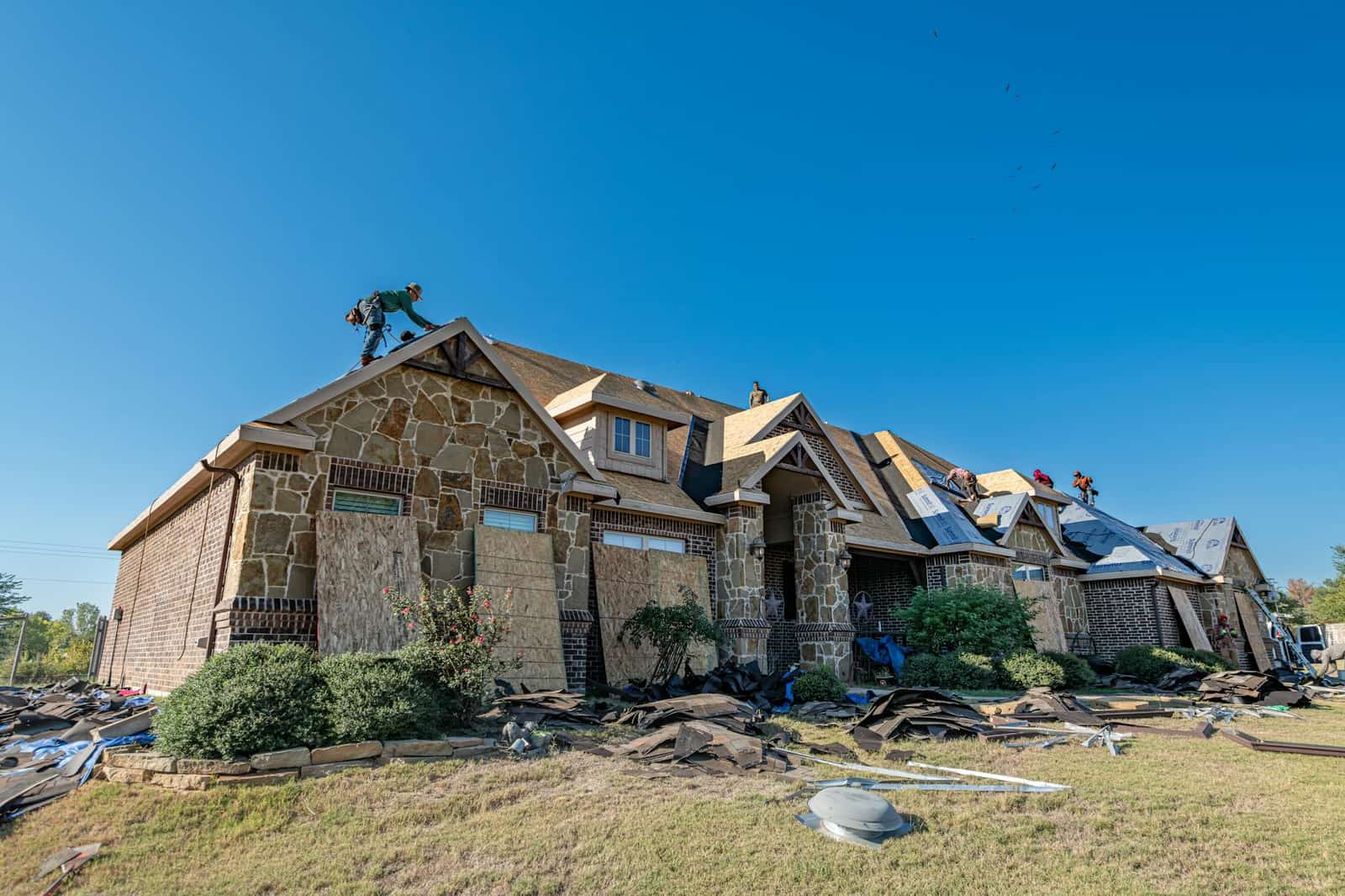
Phoenix, AZ
Roof Repair in Phoenix, AZ: Get a Local Repair Quote
Targeted repairs for leaks, missing shingles, flashing failure, and minor storm damage, with fast turnaround from local contractors in our network.
Phoenix roofs face the worst UV exposure of any U.S. market. Asphalt shingles age 30 to 40 percent faster here than in Boston.
Tell us what's wrong and we'll line up Phoenix repair specialists who handle your exact scope.
Roof repair in Phoenix, AZ is a local-code, local-climate, and local-labor-market decision. We connect Phoenix homeowners to a roofer in our network who handles your scope and timeline, by phone.
Roof repair in Phoenix is a tile, flat-roof, and underlayment-condition decision
A Valley roof repair plays by a different rulebook than asphalt-shingle repairs elsewhere in the country. Most metro Phoenix homes — Scottsdale, Chandler, Gilbert, Mesa, north Phoenix, Cave Creek — run on concrete or clay tile, where the dominant repair scenario is wind-dislodged tile after a monsoon event plus underlayment degradation that's reached end of life beneath an otherwise-intact tile field. Arcadia, Sunnyslope, and the mid-century neighborhoods run heavy on flat or low-slope systems (TPO, EPDM, modified bitumen, polyurethane foam) where the repair is membrane-seam work and reflective recoating. Asphalt repairs make up only a slice of Valley demand.
If you have dislodged tile, an active flat-roof leak, or visible damage from any 2024–2026 monsoon event, talk to screened Phoenix repair pros — most network contractors offer a written inspection and a no-obligation scope.
What actually drives Phoenix roof repairs
Four failure modes account for the bulk of repair work:
- Wind-dislodged tile. This is the dominant Valley repair scenario. The summer monsoon (mid-June through September) produces 50–70 mph microburst events that dislodge improperly fastened tile, especially on perimeter and ridge courses. A wind event that dislodges visible tile commonly tears the underlayment beneath neighboring tiles, so the repair scope is often larger than the visible damage.
- Underlayment failure beneath intact tile. Concrete and clay tile last 50–100+ years; the underlayment beneath does not. At the 25–35 year mark, the underlayment reaches end of life and leaks present without any visible tile damage. The repair is a "lift and relay" on the affected slope — remove tile, replace underlayment with a high-temperature membrane, re-lay the existing tile. See our Phoenix roof replacement page for the broader lift-and-relay framing.
- Flat-roof seam and coating failure. Mid-century moderns in Arcadia, Biltmore, and Sunnyslope routinely have single-ply TPO or modified-bitumen membranes that fail at the seams under sustained UV. The repair is seam re-weld or torch-down repair plus a reflective topcoat that meets Cool Roof Rating Council reflectance thresholds.
- Hail-cracked tile. Less frequent than monsoon-wind damage but real. The October 5, 2022 hailstorm produced widespread cracked-tile damage across north Scottsdale and Cave Creek. Cracks often don't show until wind or foot load completes the break, so a trained tile inspector finds damage that a casual roof walk misses.
The right repair scope depends on which material, which damage type, and how the underlayment has aged.
When to repair vs. when to replace in Phoenix
For most Valley roofs, the decision turns on material and underlayment age:
- Tile roof under 20 years old, isolated wind-dislodged tiles, no visible underlayment damage: targeted repair, set the loose tile back with the manufacturer's high-wind fastening, replace any broken tile with matched stock. Verify the underlayment beneath is still serviceable.
- Tile roof 20–35 years old, multiple slopes with dislodgement, underlayment showing wear: this is the lift-and-relay window. Repair the visible damage and plan the full underlayment relay within the next 1–3 years if not immediately.
- Flat or low-slope system 12+ years old with seam failures and coating loss: assess whether a re-coat (3–8 year extension) or a full membrane replacement is the right scope. UV exposure in Phoenix degrades single-ply systems faster than any other climate.
- Asphalt shingle roof past 12 years with significant granule loss: in the Valley, asphalt commonly hits 14–18 years vs. published 20–25, so a roof that looks "young" by Midwest standards may be at the replacement decision earlier here. See our Phoenix roof replacement page.
The right Valley repair contractor is material-specific. Tile, flat, foam, and asphalt are different trades; a generalist will undercount damage on the material they don't specialize in.
Phoenix-specific repair scope items
Five items separate a quality Valley repair from a generic patch:
- High-temperature underlayment matching. When repair work involves removing tile and exposing underlayment, the replacement material must be a self-adhered modified bitumen or high-temperature synthetic rated for sustained 200°F+ exposure. Standard 30-pound felt does not survive Valley attic temperatures past 8–12 years. This is the single most consequential spec on any tile repair.
- Manufacturer high-wind tile fastening. Wind-dislodged tile repairs should follow the original tile manufacturer's high-wind nailing or screw-down pattern, supplemented by foam adhesive on perimeter and ridge courses. Improperly fastened tile is the textbook re-dislodgement setup.
- Reflective coating restoration on flat roofs. Flat-roof repairs that disturb the existing reflective coating should reapply Cool Roof Rating Council certified topcoat across the disturbed area. Phoenix municipal codes increasingly require reflective surfaces; coverage of the original coating warranty depends on the recoat.
- Cracked-tile identification. Tile-trained inspectors identify cracked tile that an adjuster walking the roof at speed routinely misses. A claim-quality cracked-tile assessment uses light hand pressure or a soft mallet to find broken tile that's structurally compromised but cosmetically intact.
- Permits. The City of Phoenix requires a residential repair permit for repairs above a defined scope. Scottsdale, Mesa, Chandler, Gilbert, Tempe, Glendale, Peoria, and Surprise enforce parallel rules through their respective building departments.
Neighborhoods where repair calls cluster
Demand patterns vary across the Valley:
- Scottsdale, Paradise Valley, and Cave Creek — tile-dislodgement and underlayment-lift work dominates. Stone-coated steel repair work is rising on modern-architecture homes.
- Arcadia, Biltmore, and central Phoenix — flat and low-slope membrane repair work. Reflective recoats are the most common scope on roofs 8+ years old.
- Chandler, Gilbert, Tempe, and Mesa — 1990s–2010s tile across master-planned subdivisions, many in the underlayment lift-and-relay window now. High demand for high-temperature underlayment specification.
- Glendale, Peoria, and Surprise — newer asphalt and tile across northwest Valley growth corridors. Asphalt repair work is rising on 2000s-era builds.
- Sun City, Sun Lakes, and Apache Junction — large 55+ communities with mixed inventory. HOA documentation often required before work starts.
Insurance and repair in Arizona
Most Arizona HO-3 policies follow A.R.S. § 20-1115 two-year contract-of-insurance limits, longer than many coastal states. Some carriers shorten the practical filing window contractually; confirm your specific deadline with your declarations page or the Arizona Department of Insurance and Financial Institutions consumer help line.
Cracked tile is a covered loss under standard HO-3 language. The supplement workflow on dislodged-tile claims often expands to the underlayment lift-and-relay across the affected slope when the wind event damaged the underlayment beneath neighboring tiles — document this in the cause-of-loss report.
Several Arizona carriers offer hail-deductible reductions or premium credits for documented Class 4 (UL 2218) impact-rated installations on asphalt-shingle roofs. The list changes; the DIFI office tracks current carrier programs.
See our guides on does insurance cover roof replacement, the insurance adjuster meeting checklist, and ACV vs RCV settlement math for the full claim sequence.
What to expect from a network match
Every Phoenix-area contractor in our network carries an active Arizona Registrar of Contractors license, general liability insurance, and a clean background check before any homeowner lead reaches them. We ask network partners to re-confirm license and insurance annually. Match flow: tell us about your roof material (tile, flat, foam, asphalt) and damage type, we route the lead to up to three Valley pros who specialize in your specific repair, and you collect written scopes before deciding. See our Phoenix city hub for the full local match context, our Phoenix roof replacement page if your damage is pushing toward full replacement, and our editorial policy for sourcing standards.
Neighborhoods we serve
- Scottsdale
- Tempe
- Mesa
- Chandler
- Gilbert
- Glendale
- Paradise Valley
- Ahwatukee
Other services in Phoenix
Roof Replacement in Phoenix
Roof Replacement from local Phoenix pros.
Storm Damage in Phoenix
Storm Damage from local Phoenix pros.
Flat Roofing in Phoenix
Flat Roofing from local Phoenix pros.
Metal Roofing in Phoenix
Metal Roofing from local Phoenix pros.
Roof Inspection in Phoenix
Roof Inspection from local Phoenix pros.
Roof Repair in nearby cities
Related guides and tools
Talk to local roof repair pros in Phoenix
Talk to a Phoenix roof repair pro who handles full and partial replacements.
Under a minute. One local pro, not 12.
Lead-routing service. Calls may be recorded.