Guide
Tear-Off vs Overlay: Which Is Right?
Tear-off or roof-over? See what IRC R908.3 allows in your state, the cost gap, lifespan impact, and warranty trade-offs. Talk to a roofer in our network.
By Local Roofing Help Editorial Team, Reviewed by a licensed roofing contractor · Last reviewed 2026-05-26
Talk to a local rooferBy Local Roofing Help Editorial Team, Reviewed by a licensed roofing contractorPublished
Quick answer: A roof overlay (also called a roof-over or recover) installs a new layer of shingles directly over the existing layer. A tear-off removes the old roof down to bare decking before installing new. IRC R908.3 caps most jurisdictions at two total roof layers and prohibits overlay on damaged, wet, or saturated decking. Tear-off is the preferred install for full warranty coverage, decking inspection, and longer roof life. Overlay saves roughly $1,000 to $3,000 upfront on a typical home but can shave 5 to 10 years off the new roof and complicate the next replacement. This is general information, not building-code advice for your specific jurisdiction.
What overlay (roof-over) means
A roof overlay is a reroofing method that installs a new layer of asphalt shingles directly on top of the existing shingle layer. The old roof is not removed. The new shingles are nailed through the existing layer and into the decking below.
Overlay is sometimes called a "recover" in code language, a "roof-over" in trade language, or a "layover" in older builder slang. All four terms describe the same approach: keep the existing roof in place and add a second course of shingles above it.
Overlay is permitted in most U.S. jurisdictions under specific conditions, but it is restricted by both the model building code and by many state and local amendments. It is also restricted by some shingle manufacturer warranties. The right question is rarely "can I overlay" alone, but "is overlay permitted on my roof under my code, my manufacturer's warranty, and my carrier's underwriting." The answer to all three has to be yes before overlay is on the table.
Overlay is typically only available for asphalt-shingle-over-asphalt-shingle work. Metal, tile, slate, and wood shake installations require a clean deck and cannot be overlaid. Overlay over wood shake, tile, or slate is prohibited under IRC R908.3 regardless of deck condition.
What tear-off means and why it is the standard
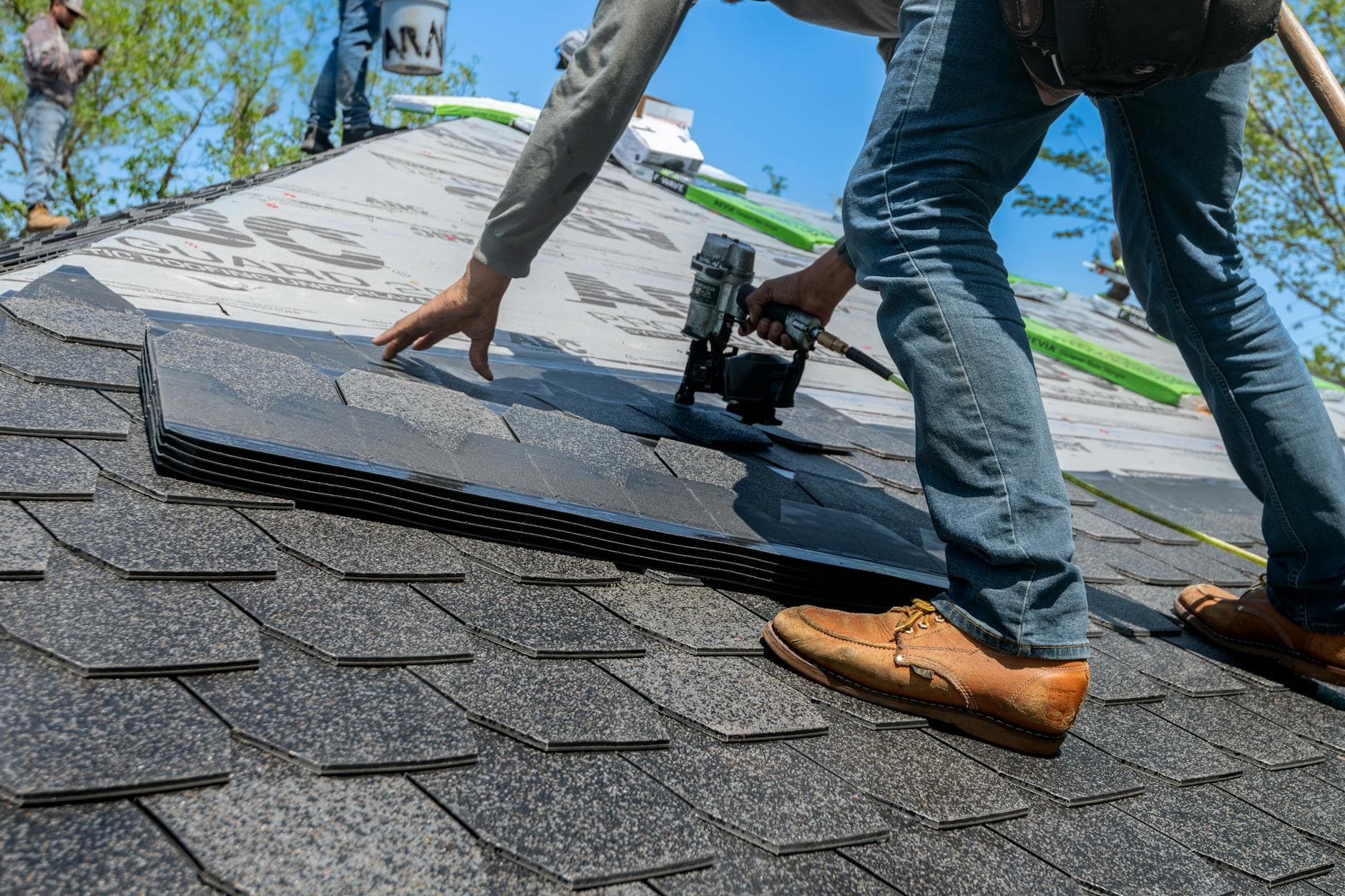
A tear-off removes the existing roof down to bare decking. The crew strips every layer of shingles, all underlayment, drip edge, and ice and water shield. The decking is exposed and inspected, damaged sheets are replaced, then the new roof is installed from the deck up.
Tear-off is the industry-standard reroofing method for five reasons:
- Decking inspection. The contractor can see every square foot of decking and replace damaged or rotted sheets before the new roof goes on. Damage hidden under shingles cannot be found any other way.
- Full warranty coverage. Most shingle manufacturers (GAF, Owens Corning, CertainTeed) restrict their top-tier system warranties to tear-off installs. Overlay can void the system-warranty tier on the new shingles.
- Code certainty. A tear-off resets the layer count to zero. The new install starts within IRC R908.3's two-layer ceiling regardless of how many layers were on the roof before.
- Clean underlayment, flashing, and ventilation reset. Drip edge, ice and water shield, valley flashing, step flashing, and ridge ventilation are all renewed. An overlay leaves all the original detail work in place.
- Longer roof life. A tear-off install with new underlayment, fresh flashing, and inspected deck typically outperforms an overlay install of the same shingle by 5 to 10 years.
Tear-off costs more upfront because labor and disposal are real expenses. The dump fee or dumpster rental, the per-square tear-off labor, and the disposal of old underlayment all add to the bottom line. The cost gap versus overlay typically runs $1,000 to $3,000 on a single-story home with one existing layer.
IRC R908.3 and state amendments
The International Residential Code (IRC) is the model code most U.S. jurisdictions adopt for one- and two-family dwellings. The 2021 edition's section R908.3 Recovering Versus Replacement governs when an overlay is permitted and when a full tear-off is required.
The plain reading of R908.3, paraphrased: a recover (overlay) is not permitted in any of these conditions, which always require a full tear-off:
- The existing roof or roof covering is water-soaked or has deteriorated to the point that it cannot serve as a base for additional roofing.
- The existing roof covering is wood shake, slate, clay, cement, or asbestos-cement tile.
- The existing roof has two or more applications of any type of roof covering already in place.
The corollary: where none of the three prohibitions apply, R908.3 permits a single overlay (raising the total layer count from one to two). A second overlay (raising to three layers) is never permitted under the IRC.
R908.3 sets the model-code floor. State and local amendments often go further:
States that prohibit overlay entirely on residential roofs. A handful of states amend the IRC to disallow recover regardless of layer count. Confirm with the local building department before assuming overlay is on the table.
States with stricter manufacturer-rated wind-zone amendments. Florida, parts of Texas, and Gulf Coast counties often require tear-off in high-wind ZIPs because the recover install cannot meet the required wind-uplift testing without exposed-deck nailing.
Cities and counties with their own ordinances. Local jurisdictions can be stricter than the state code. Some cities require tear-off on any reroof that requires a permit, regardless of layer count.
The practical move: before signing a contract for an overlay, ask the contractor to put the local code citation in writing on the estimate. A contractor proposing an overlay in a jurisdiction that prohibits it is either uninformed or shifting code-compliance risk onto the homeowner.
When overlay is allowed and when it is not
Overlay is allowed when all six of these conditions are met. If any one fails, tear-off is the right call:
- One existing layer only. A roof with two existing layers cannot legally take a third.
- Asphalt over asphalt. Overlay requires asphalt shingles below and asphalt shingles above. Wood shake, tile, slate, and metal substrates are prohibited per R908.3.
- Sound, dry decking. The deck must be structurally intact, dry, and not deteriorated. Soft spots, visible rot, or water staining on the underside of the deck disqualify overlay.
- Flat existing shingle field. The existing shingles must lie flat. Cupped, curled, or buckled shingles create a wavy surface that telegraphs through the overlay and fails prematurely.
- Adequate structural capacity. The roof framing must carry the additional dead load (roughly 230 to 320 pounds per square of standard architectural asphalt shingles). On older homes with light framing, the engineer or contractor should verify capacity.
- Local code, manufacturer warranty, and insurance carrier all permit it. Even where R908.3 permits overlay, the manufacturer may downgrade the warranty tier and the insurance carrier may decline to renew the policy on a multi-layer roof. All three approvals are required.
Conditions that disqualify overlay (any one is sufficient to require tear-off):
- Two or more existing layers.
- Wood shake, tile, slate, or metal substrate.
- Damaged, wet, soft, or rotted decking.
- Cupped, curled, or buckled existing shingles.
- Leak history without a confirmed root cause.
- Sagging roofline visible from the ground.
- Hail or wind damage on the existing layer (the damaged shingles need to be replaced, not covered).
- Local code amendment prohibiting overlay.
- Manufacturer warranty restriction on the new shingle line.
- Insurance carrier underwriting refusal.
Cost comparison
Overlay is the cheaper install upfront. The savings come from three places:
Tear-off labor. A single-layer tear-off runs roughly $100 to $200 per square in labor. Overlay skips that line entirely. On a 25-square roof, that is $2,500 to $5,000 of labor avoided.
Disposal. Construction debris disposal is a real cost. A 25-square tear-off typically fills a 20-yard dumpster, and dump fees vary by jurisdiction from a few hundred dollars to over a thousand. Overlay generates almost no debris.
Decking inspection time. A tear-off includes the time the crew spends inspecting and replacing deck sheets after the old roof is off. Overlay skips that step entirely because the deck stays covered.
After these three savings, the typical overlay runs $1,000 to $3,000 less than the equivalent tear-off on a single-story home with one existing layer. The gap narrows on larger or more complex roofs because the new-shingle install cost is the same either way.
What overlay does not save: the same shingles cost the same money, the underlayment line is similar (an overlay still uses underlayment under the new layer per most manufacturer specifications), and the flashing details on penetrations still require attention.
For an estimate-by-estimate breakdown of the line items where overlay and tear-off diverge, see the How to Read a Roofing Estimate guide.
Lifespan comparison and warranty impact
An overlay install typically shaves 5 to 10 years off the service life of the new shingles compared to the same shingles installed on a clean deck. The shortfall comes from three sources:
Heat retention. The two-layer roof retains more heat than a single-layer roof. Higher attic temperatures accelerate asphalt aging and granule loss. On a 30-year architectural shingle, the practical life on an overlay can run closer to 20 to 25 years.
Less uniform install. The new shingles follow the contour of the layer below. Subtle waves, cupping, and edge gaps in the original layer telegraph through and create stress concentrations in the overlay. Wind-uplift failures often start at these locations.
Underlayment compromise. The overlay does not get a fresh course of ice and water shield against the deck. Any future leak has to find its way down through both layers before it shows on a ceiling, which means leaks present later, larger, and more expensive to repair.
The shingle manufacturer warranty often reflects the lifespan gap. Many manufacturer warranty tiers (GAF Master Elite system warranties, Owens Corning Platinum system warranties, CertainTeed SELECT system warranties) are restricted to tear-off installs. An overlay typically qualifies only for the standard product warranty, which covers manufacturing defects but not the labor cost of tearing off and reinstalling if the shingles fail prematurely.
Read the shingle warranty document before signing for an overlay install. The warranty tier you actually receive may be substantially shorter than what is marketed for the same product line.
Structural load math
A typical architectural asphalt shingle weighs roughly 230 to 320 pounds per square (100 square feet of roof area), depending on the product line. A second layer doubles that dead load on the framing.
For a typical 25-square home, the additional dead load from one layer of architectural shingles is roughly 5,750 to 8,000 pounds spread across the roof. Most modern framing handles the additional load without issue. Older homes with light rafters or undersized trusses may not, especially in snow country where the live load is already at the design limit.
The contractor should verify framing capacity before recommending overlay on:
- Homes built before 1970 with rafter framing on 24-inch centers.
- Roofs with visible sag, deflection, or sloped ceilings on the top floor.
- Snow-country roofs where the design live load plus the doubled dead load approaches the framing limit.
For these conditions, a structural engineer's review is the right step. The cost of an engineer's letter is small compared to the cost of an overloaded roof that has to be torn off and replaced inside its expected service life.
Insurance and resale implications
Most homeowners insurance carriers will accept claims on overlay-installed roofs the same way they accept claims on tear-off roofs. The difference shows up at policy renewal and at home resale.
Renewal underwriting. Some carriers decline to renew homeowners policies on roofs with two layers because of the higher claim frequency and accelerated aging. The renewal letter may cite the multi-layer roof as the reason for nonrenewal. Replacement coverage on overlay-installed roofs is sometimes excluded or capped at actual cash value (ACV) rather than replacement cost value (RCV), which can materially reduce a claim payout. See the ACV vs RCV Roof Insurance guide for the dollar impact.
New-policy underwriting. When you switch carriers, the underwriting inspection typically counts the layers visible at the eave. A two-layer roof can disqualify the home from preferred-tier pricing or, on some carriers, from coverage at all.
Home resale. A buyer's home inspector will flag the multi-layer roof. The buyer typically responds in one of two ways: ask for a price concession to fund a future tear-off, or ask for the seller to perform the tear-off before closing. Either outcome erodes the overlay's upfront savings.
Future replacement cost. When the overlay reaches end of life, the next replacement is a mandatory two-layer tear-off. Two-layer tear-offs cost roughly 1.5 to 2 times the labor of a single-layer tear-off because there is more material to remove. The upfront savings on the overlay are often consumed (and then some) by the next replacement.
Comparison table
The trade-offs by dimension:
| Dimension | Tear-Off | Overlay | |---|---|---| | Decking inspection | Full visual inspection of every sheet | None possible; deck stays covered | | Manufacturer warranty tier | Eligible for top-tier system warranties | Often limited to standard product warranty | | Code certainty | Resets layer count to zero | One overlay allowed; never two per IRC R908.3 | | Underlayment | Fresh underlayment and ice and water shield | New underlayment over existing layer, no deck contact | | Flashing reset | Drip edge, valley, step, and counter flashing all renewed | Original flashing typically reused | | Ventilation reset | Ridge vent, intake, and exhaust can be added or upgraded | Stays as-is | | Expected lifespan | Full rated lifespan of the new shingles | 5 to 10 years shorter than the same shingles on a clean deck | | Insurance renewal | No layer-count penalty | Some carriers decline to renew multi-layer roofs | | Resale | No multi-layer flag on inspection | Buyer's inspector flags it; price concession typical | | Upfront cost | Higher by roughly $1,000 to $3,000 on a typical home | Lower by the same amount |
The pattern: overlay trades a small upfront savings for a larger long-term cost across lifespan, warranty tier, insurance posture, resale, and the next replacement. The math favors tear-off on almost every dimension except the contract-signing-day price.
When overlay still wins: a short-hold property (selling within 5 years) where the buyer's inspector finds the existing layer in flat, sound condition; a homeowner with a fixed budget where the tear-off is genuinely out of reach; or a jurisdiction with a friendly code amendment and a manufacturer line that maintains the system warranty on overlay.
Outside those cases, tear-off is the preferred install. The cost gap is usually worth paying.
Can I roof over an existing roof?
Sometimes. IRC R908.3 permits one overlay on an asphalt-shingle roof when the deck is sound, the existing layer is flat, and no second layer exists. Overlay is prohibited over wood shake, tile, slate, and metal, and prohibited on damaged or water-soaked decking. Manufacturer warranty and insurance carrier approval are also required.
The full overlay-versus-tear-off comparison earlier in this guide carries the lifespan, warranty, structural, insurance, and resale trade-offs. The short read: overlay saves $1,000 to $3,000 upfront on a typical home but shaves 5 to 10 years off the new roof and downgrades the warranty tier. Confirm code approval, manufacturer warranty tier, and insurance carrier underwriting in writing before signing for an overlay install.
Related reading
The overlay-versus-tear-off question sits inside the larger replacement decision:
- Roof Replacement Timeline (Day by Day) walks the full project from contract through final inspection, with the tear-off day specifically called out.
- How to Read a Roofing Estimate covers the line items where tear-off scope, decking allowance, and disposal appear on the written quote.
- Questions to Ask a Roofing Contractor covers the homeowner due-diligence checklist for any roof project.
- Is It Cheaper to Repair or Replace a Roof covers the upstream decision before the install method even comes up.
- How Long Does a Roof Last sets the lifespan baseline that overlay's shorter service life works against.
- Average Cost of a New Roof covers the variables that shape the tear-off-versus-overlay cost gap.
- How to Tell If You Need a New Roof covers the end-of-life signs that trigger the reroof decision.
- ACV vs RCV Roof Insurance covers the loss-settlement difference that often penalizes overlay-installed roofs.
For the roof replacement service hub, see Roof Replacement. For a calibrated cost range on your specific home, see the Replacement Cost Calculator.
FAQ
Can I install a new roof over the old one?
Sometimes. IRC R908.3 caps most jurisdictions at two total roof layers and prohibits overlay on damaged or water-soaked decking, on wood shake, tile, slate, and metal substrates, and on any roof that already has two layers. Where overlay is permitted, the manufacturer warranty and the insurance carrier still have to agree.
Is overlay cheaper than tear-off?
Yes upfront, by roughly $1,000 to $3,000 on a typical single-story home with one existing layer. The savings come from skipping tear-off labor, disposal, and decking inspection time. The lifetime math is rarely favorable because overlay shortens the new roof's service life by 5 to 10 years and complicates the next replacement.
Will overlay void my shingle warranty?
It can downgrade the warranty tier. Most shingle manufacturers restrict their top-tier system warranties (GAF Master Elite, Owens Corning Platinum, CertainTeed SELECT) to tear-off installs. An overlay typically qualifies only for the standard product warranty, which covers manufacturing defects but not labor cost on a premature failure. Read the warranty document before signing.
Does insurance accept overlay claims?
Most carriers process claims on overlay-installed roofs the same way they process claims on tear-off roofs. The difference is at renewal and underwriting. Some carriers decline to renew homeowners policies on roofs with two layers. New-policy underwriting often disqualifies multi-layer roofs from preferred-tier pricing or requires actual cash value (ACV) loss settlement instead of replacement cost value (RCV).
How much extra weight does overlay add?
Roughly 230 to 320 pounds per square of standard architectural asphalt shingles. On a typical 25-square home, that is 5,750 to 8,000 pounds of additional dead load on the framing. Modern framing handles the added load without issue in most cases. Older homes with light rafters or snow-country roofs at design live-load limits should be evaluated by a structural engineer before overlay.
Can I overlay over wood shake or tile?
No. IRC R908.3 prohibits recover over wood shake, slate, clay, cement, and asbestos-cement tile substrates regardless of layer count. Overlay is generally limited to asphalt over one existing asphalt layer. Wood shake, tile, and slate reroofs always require a full tear-off.
This guide was written by the Local Roofing Help Editorial Team and reviewed by a licensed roofing contractor. Last reviewed: 2026-05-26. This is general information, not building-code advice for your specific jurisdiction. Confirm any code citation with the local building department before signing a contract. Want a local roofer to walk your roof? Talk to a local roofer in our network by phone.
Need a local roofer?
Talk to a roofer who handles your scope. Pre-screen first, then we connect you by phone.
Under a minute. One local pro, not 12.
Lead-routing service. Calls may be recorded.