Philadelphia, PA
Roof Replacement in Philadelphia, PA: Talk to Local Pros Today
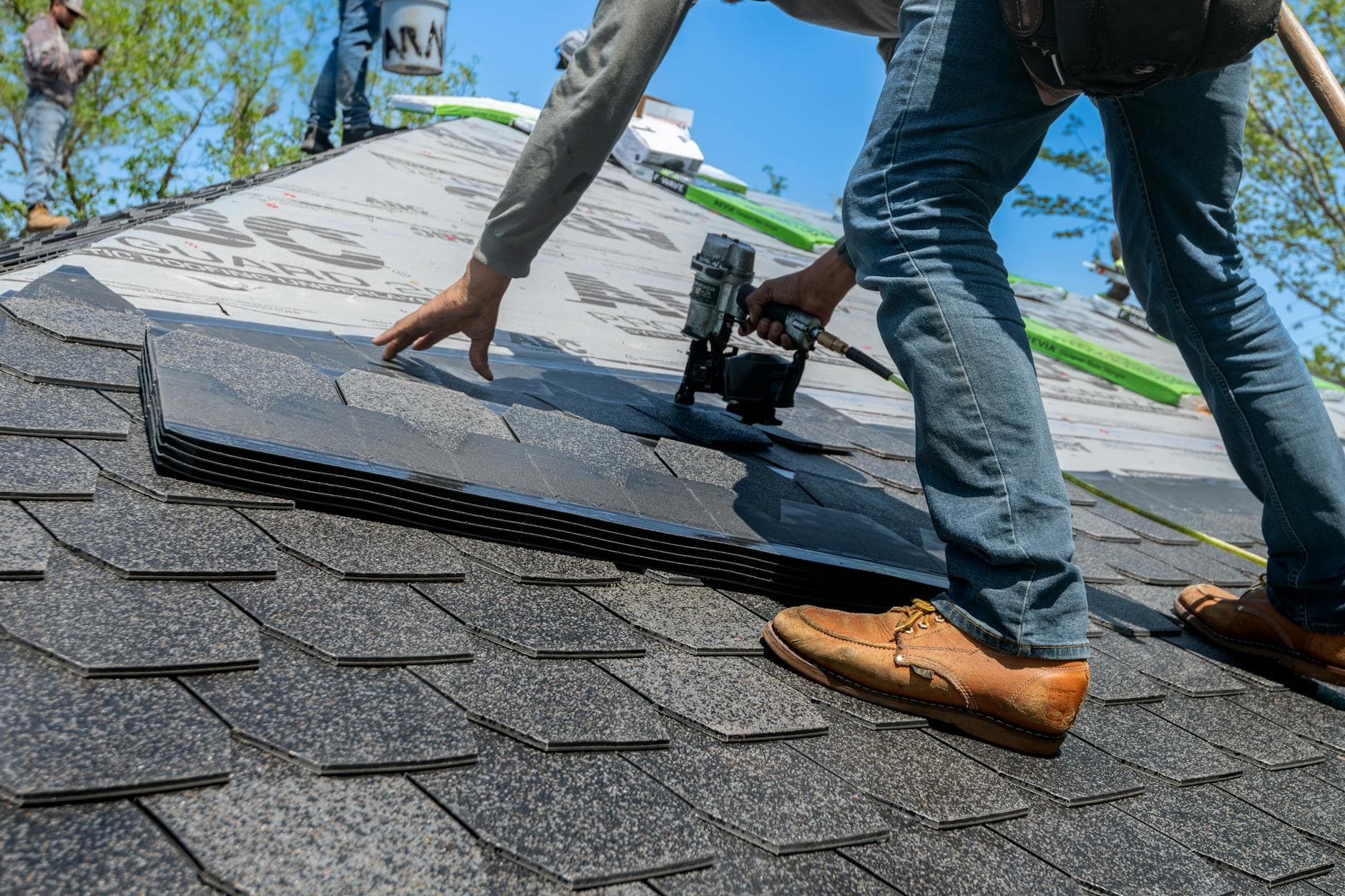
Full roof replacement for asphalt shingle, metal, tile, or flat systems: tear-off, decking inspection, underlayment, and new covering installed by a local crew.
Philadelphia's row-house roof grid drives parapet flashing and party-wall coping issues alongside Mid-Atlantic Nor'easter exposure. Dense block drainage and shared cornice details shape most replacement scopes.
Profile your project, get a tailored checklist, and meet Philadelphia pros who specialize in your exact scope.
Roof replacement in Philadelphia, PA is a local-code, local-climate, and local-labor-market decision. We connect Philadelphia homeowners to a roofer in our network who handles your scope and timeline, by phone.
Roof replacement in Philadelphia is an ice-dam, row-home, and slate-vs-asphalt decision
Replacing a roof in metro Philadelphia sits at the intersection of three local factors most generic asphalt jobs ignore. The metro records 70 to 100 freeze-thaw days per winter per NOAA NWS Mount Holly office climatology, and the older intown row-home stock from Center City through Manayunk and Fishtown was built with under-ventilated attics that drive ice-dam formation on every meaningful snow event. The housing inventory leans heavily on 1880s through 1950s brick row homes with steep front slopes, flat or low-slope rear additions, and a meaningful subset (Chestnut Hill, parts of the Main Line) still running original slate or terne metal that should usually be salvaged rather than torn off.
If your Philadelphia roof is past 18 years old, has had any ice-dam leak in a recent winter, or hasn't been inspected since the most recent severe storm cluster, talk to screened Philadelphia replacement pros. Most network contractors offer a written inspection plus a no-obligation replacement scope.
Why Philadelphia roofs wear out
Four local conditions compress the useful life of a generic asphalt roof in the metro:
- Freeze-thaw cycling. Philadelphia averages 70 to 100 freeze-thaw days per year per NOAA NCEI station records. Each cycle stresses every shingle seam, flashing joint, and underlayment lap. The compound effect over 20 winters is significantly more wear than the same shingle would see in a milder climate, even before any storm damage.
- Ice dams on under-ventilated attics. Most pre-2000 Philadelphia homes are under-ventilated for the local climate. Snow on the roof melts from attic heat loss, refreezes at the colder eave, and pushes meltwater under shingles into the structure. Ice-dam leaks are the dominant winter claim driver across Fishtown, Northern Liberties, Manayunk, East Falls, and the older Northeast row-home neighborhoods.
- Coastal Mid-Atlantic wind events. The metro records frequent 40 to 60 mph wind events year-round, plus tropical and post-tropical remnants tracking up the I-95 corridor in late summer per NOAA NHC climatology. Flashings and ridge caps see real load.
- Flat-roof aging on rear additions. Most Philadelphia row homes carry flat or near-flat rear sections over the kitchen, mud room, and back-deck additions. Standard 20-year asphalt-rolled-roofing on these surfaces fails earlier than the published warranty under the freeze-thaw plus summer-UV cycle.
The combined effect: a generic 110-mph architectural asphalt roof in metro Philadelphia commonly lands at 18 to 24 years of useful life, with most failures concentrated at the eaves (ice damming) and around penetrations (freeze-thaw flashing failure).
Material recommendations for Philadelphia roofs
For the typical Philadelphia row home or single-family build. Asphalt-shingled steep-slope main roof with a flat or low-slope rear addition. The right replacement spec is a Class H (130-mph) wind-rated architectural asphalt shingle on the steep slopes with ice-and-water shield extended at least 6 feet up from every eave (the IRC R905.1.2 minimum is 24 inches past the wall plate; Philadelphia practice goes further). Specify balanced soffit-and-ridge ventilation sized to attic volume per IRC R806. Major brands meeting the wind-rating spec include GAF Timberline HDZ, CertainTeed Landmark, and Owens Corning Duration.
For the flat or low-slope rear addition, TPO single-ply membrane is the right call for most Philadelphia row homes. White or light-grey reflective TPO drops summer cooling load on the rear addition. For larger flat surfaces and converted-warehouse stock in Fishtown and Northern Liberties, modified bitumen or EPDM are both common; the contractor's familiarity with the system matters more than the membrane choice. See our asphalt vs metal roof guide for a structured comparison on holds past 25 years.
For Chestnut Hill, Mount Airy, and Main Line homes with original slate in salvageable condition, the right call is usually a slate-salvage rebuild rather than tear-off. Original Welsh and Vermont slate routinely lasts 90 to 150 years; the underlayment, fasteners, and flashings beneath it do not. A slate-trained contractor rebuilds the substrate and re-laps the existing field at a fraction of the cost of a full asphalt re-roof, and preserves the architectural value the neighborhood is built on. For homeowners staying 30+ years on stay-forever properties, standing-seam Galvalume metal is gaining share on architecturally significant homes where slate is no longer salvageable.
Philadelphia-specific install requirements
Five items separate a quality Philadelphia replacement from a generic job:
- Extended ice-and-water shield. This is the single most consequential spec on a Philadelphia re-roof. Standard 36-inch ice-and-water shield per IRC minimums is not enough on most Philadelphia eaves. Specify a 6-foot strip from the eave inward, plus full coverage in all valleys, around every penetration, and along every dormer-to-main-roof intersection. Skipping this is the textbook ice-dam-leak setup.
- Permits. The City of Philadelphia Department of Licenses and Inspections requires a residential roofing permit for tear-off and re-roof projects, with required inspections during the work. Lower Merion, Cheltenham, Abington, Montgomery County (King of Prussia, Bryn Mawr area), and the surrounding Bucks, Delaware, and Chester county municipalities enforce parallel requirements through their respective building departments. No legitimate Philadelphia roofer skips this.
- Ventilation rebuild. Most pre-2000 Philadelphia row homes are under-ventilated for the local climate. A full replacement is the right moment to install balanced soffit intake and continuous ridge exhaust, sized to attic volume per IRC R806. Skipping this drives ice damming in winter and condensation in spring. Row-home geometry sometimes requires gable-end venting where soffit access is constrained by the party wall; an experienced roofer accounts for that.
- Decking inspection. Older row homes commonly have plank decking with gaps too wide for modern shingle nail-pull strength. The contractor should plan to overlay 7/16" OSB or replace planks where the moisture meter trips or the gap geometry fails the shingle spec. Older Manayunk, Roxborough, and Northeast Philly homes can also show ridge-board sag that needs correction before any new shingles go on.
- Cold-weather install timing. Most asphalt shingles need 40°F+ daytime temperatures to seal properly. Late-season Philadelphia installs (mid-October onward) require either heated installation methods or hand-sealing the seal-strip bond on every shingle to ensure proper bonding before winter wind loads test the install.
Neighborhoods we replace roofs in
Demand patterns vary across metro Philadelphia:
- Center City, Fishtown, and Northern Liberties — older row homes and converted-warehouse stock with steep front slopes plus flat rear additions. Typical replacement: architectural asphalt with extended ice-and-water shield on the front plus TPO on the rear flat.
- Manayunk, Roxborough, and East Falls — Schuylkill-river row homes on steep grades, plank decking common, often with two- and three-story dormer geometry. Typical replacement: full tear-off with ventilation rebuild and OSB overlay where decking fails the meter.
- Chestnut Hill, Mount Airy, and West Mount Airy — historic-district housing with frequent original slate. Slate-salvage rebuilds preserve resale value better than asphalt conversion in most cases. Historic-preservation review may add documentation steps.
- Bryn Mawr, Wynnewood, and the Lower Main Line — older Tudor and Colonial-revival homes with slate, asphalt, and tile mixes. Stay-forever holds; standing-seam metal gaining share on stone-and-slate architecture.
- King of Prussia, Conshohocken, and Plymouth Meeting — 1970s through 2000s suburban housing across Montgomery County. Typical replacement: 25 to 35 sq Class H wind-rated architectural with ventilation rebuild and extended ice-and-water shield.
Insurance and roof replacement in Pennsylvania
Pennsylvania requires prompt notice of loss on storm-damage claims, with most HO-3 policies imposing a one- to two-year suit-limitation period from the date of loss. The Pennsylvania Insurance Department publishes consumer guidance on roof claims and is the right escalation path for disputed claims-handling. Notice windows are typically 30 to 60 days from the storm event under most carrier forms.
For ice-dam claims specifically, the loss typically routes under all-other-perils on most Pennsylvania HO-3 policies, not under the wind-and-hail deductible. That distinction matters because all-other-perils is usually a flat dollar deductible while wind-and-hail can run as a percentage of Coverage A. Document any ice-dam damage with date-stamped photos and a contractor's cause-of-loss report.
See our guides on does insurance cover roof replacement, roof insurance claim deadlines by state, and ACV vs RCV settlement math for the full claim sequence.
What to expect from a network match
Network contractors are asked for license, COI, and background check at signup, and we ask partners to re-confirm those annually. Match flow: tell us about your project (steep-slope, flat, slate, row-home, suburban), we route the lead to up to three Philadelphia-area pros who specialize in your material and damage profile, and you collect written quotes on the same scope before deciding. See our Philadelphia city hub for the full local match context, and our editorial policy for the sourcing standard behind this page.
Neighborhoods we serve
- Center City
- Fishtown
- Manayunk
- Chestnut Hill
- Northern Liberties
- Bryn Mawr
- King of Prussia
Other services in Philadelphia
Roof Repair in Philadelphia
Roof Repair from local Philadelphia pros.
Storm Damage in Philadelphia
Storm Damage from local Philadelphia pros.
Flat Roofing in Philadelphia
Flat Roofing from local Philadelphia pros.
Metal Roofing in Philadelphia
Metal Roofing from local Philadelphia pros.
Roof Inspection in Philadelphia
Roof Inspection from local Philadelphia pros.
Roof Replacement in nearby cities
Related guides and tools
Talk to local roof replacement pros in Philadelphia
Talk to a Philadelphia roof replacement pro who handles full and partial replacements.
Under a minute. One local pro, not 12.
Lead-routing service. Calls may be recorded.