Miami, FL
Roof Replacement in Miami, FL: Talk to Local Pros Today
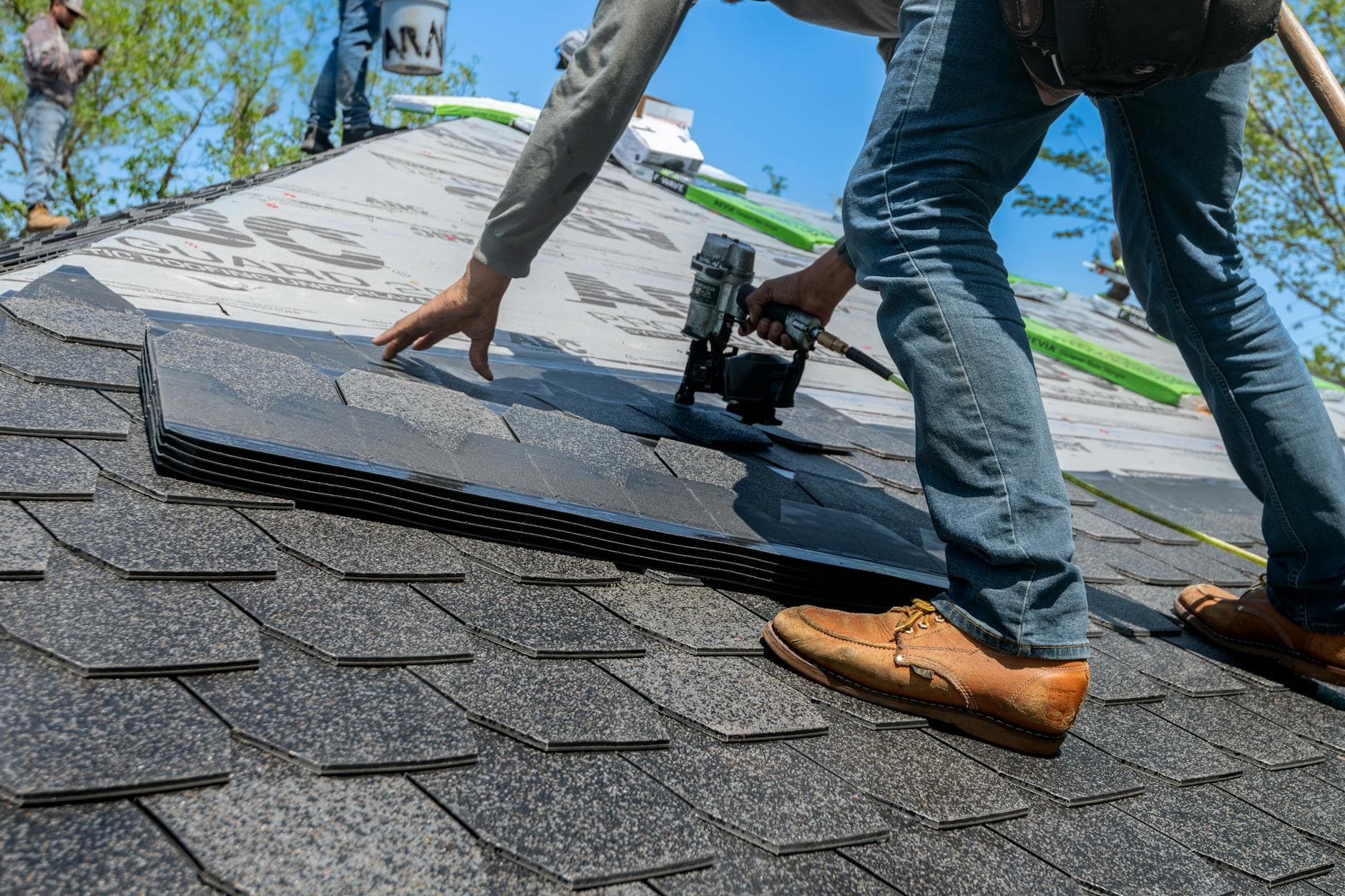
Full roof replacement for asphalt shingle, metal, tile, or flat systems: tear-off, decking inspection, underlayment, and new covering installed by a local crew.
South Florida roofs face Miami-Dade HVHZ wind codes that require NOA-tested products, plus salt-air corrosion year-round.
Profile your project, get a tailored checklist, and meet Miami pros who specialize in your exact scope.
Roof replacement in Miami, FL is a local-code, local-climate, and local-labor-market decision. We connect Miami homeowners to a roofer in our network who handles your scope and timeline, by phone.
Roof replacement in Miami is an HVHZ, wind-uplift, and tile-or-metal decision
Replacing a roof in metro Miami is unlike a job in any other U.S. market. Miami-Dade and Broward counties sit inside the Florida High Velocity Hurricane Zone (HVHZ) — the most stringent residential roofing code in the country. Every component, every fastener pattern, and every install detail on an HVHZ roof must carry Florida Product Approval (FPA) or a Miami-Dade Notice of Acceptance (NOA), and the roofing contractor must hold the credentials to perform HVHZ work. A generic 110-mph asphalt install isn't legal in this market; even residential shingles must meet the HVHZ uplift spec.
If your Miami roof is past 12 years old (asphalt) or 25 years old (tile), has had any damage in the most recent hurricane season, or hasn't been inspected since the Florida 25% rule became enforceable, talk to screened Miami replacement pros — most network contractors offer a written inspection plus a no-obligation replacement scope.
Why Miami roofs wear out
Four local conditions compress the useful life of a roof in metro Miami:
- Hurricane and tropical-storm exposure. Miami-Dade and Broward sit in the most active Atlantic hurricane corridor in the country per the NOAA NHC climatology. Major-storm events (Cat 3+) average roughly once per decade with smaller named-storm events every 1–3 years. Each event wind-loads the roof envelope past most published warranty thresholds.
- Sustained UV, salt air, and humidity. South Florida runs hot and humid year-round with intense solar load and coastal salt exposure. Asphalt shingles degrade faster here than anywhere outside Phoenix and the desert Southwest; metal fasteners corrode faster on near-coast properties; tile underlayment degrades faster than published.
- The Florida 25% rule. Florida law requires full roof replacement when more than 25% of a roof is damaged within a 12-month period — even if the rest of the roof is in good condition. This converts what would be a partial-slope repair in other states into a full-replacement scope in Florida, with significant financial and insurance implications.
- Insurance market volatility. The Florida property insurance market has tightened significantly since 2022. Carriers require recent (typically within 3–5 years) wind-mitigation inspections, often refuse renewal on roofs past 15 years, and some require Class A wind-mitigation features (Florida Building Code FBC compliance, secondary water barriers, roof-to-wall connections rated for high wind). The replacement is the moment to lock in maximum FBC credits.
The combined effect: most Miami asphalt roofs have a useful life of 12–18 years driven by insurance-market acceptance and wind-event survival rather than physical wear. Tile roofs last 50–100+ years on the tile itself, with underlayment lift-and-relay every 25–35 years.
Material recommendations for Miami roofs
The right replacement spec depends on architectural style and HOA covenants:
- Tile (clay or concrete) is the Miami standard on Mediterranean, Spanish Colonial, and most master-planned subdivisions across Coral Gables, Pinecrest, Coconut Grove, and Doral. Tile carries the strongest long-cycle math in this climate. Specify HVHZ-approved tile with foam-set or mechanical-fastened installation, and verify the contractor pulls the correct Miami-Dade NOA for the product. Plan an underlayment lift-and-relay at the 25–35 year mark on tile roofs even though the tile itself outlasts that.
- Standing-seam metal is increasingly common on Pinecrest, Coral Gables, and Coconut Grove modern-architecture renovations. 40–70 year lifespan, superior wind performance (HVHZ-rated standing-seam systems carry uplift ratings well past the 150-mph threshold), and good salt-air corrosion resistance with the right coating system. The longer-lifecycle play for any hold past one full claim cycle.
- HVHZ-approved asphalt shingles are the right material for many mid-century, ranch, and post-war homes across Hialeah, Kendall, North Miami, and Aventura. Specify Class H (130-mph) wind rating minimum, full peel-and-stick membrane underlayment as a secondary water barrier (a Florida Building Code wind-mitigation credit), six-nail pattern with ring-shank deck nailing, and the lightest color the HOA permits. Major brands with HVHZ-approved products include GAF, CertainTeed, and Owens Corning — verify the specific SKU appears in the Florida Product Approval database before signing.
For oceanfront and intracoastal homes in Miami Beach, Surfside, and Key Biscayne, the salt-corrosion factor pushes toward galvalume metal or specific corrosion-resistant tile fastening systems. Generic galvanized fasteners fail prematurely within 5 miles of saltwater.
Miami-specific install requirements
Five items are absolutely non-negotiable in this market:
- HVHZ contractor credentials. The roofing contractor must be a licensed Florida roofing contractor (CGC, CCC, or CRC license) and qualified for HVHZ work in Miami-Dade and Broward counties. Verify license status on the Florida Department of Business and Professional Regulation lookup before signing.
- Product Approval / Notice of Acceptance. Every roofing component — shingle, tile, underlayment, fastener, ridge vent — must carry either a Florida Product Approval or a Miami-Dade Notice of Acceptance. The permit application requires the product approval numbers; verify they're recorded.
- Secondary water barrier. Florida Building Code wind-mitigation credits for a properly installed secondary water barrier (full peel-and-stick membrane over the entire deck) measurably reduce annual homeowner insurance premiums. Specify this on every replacement.
- Roof-to-wall connection upgrade. Wind-mitigation credits for hurricane straps or clips at the roof-to-wall connection are larger than most homeowners realize. The replacement is the moment to verify these are present and to install them if not. The 4-point OIR-1802 wind-mitigation inspection form documents the credits.
- Permits. Miami-Dade and Broward counties enforce stringent permitting requirements through their respective Building Departments, with inspections at deck exposure, secondary water barrier, and final. Cities including Miami, Coral Gables, Pinecrest, Aventura, Hialeah, and Doral enforce parallel rules.
Neighborhoods we replace roofs in
Demand patterns vary across the metro:
- Coral Gables, Pinecrest, and Coconut Grove — tile re-roofs and underlayment lift-and-relays dominate. Standing-seam metal gaining share on modern-architecture work. Historic-district review common.
- Miami Beach, Surfside, and Key Biscayne — coastal exposure plus historic-district requirements. Corrosion-resistant fastening systems essential.
- Kendall, Westchester, and Doral — 1980s–2010s tile and asphalt across master-planned communities. Many in the underlayment-lift window now.
- Aventura, North Miami Beach, and Sunny Isles — high-rise condo and single-family mix. HOA documentation required before work starts.
- Homestead, Florida City, and Cutler Bay — younger asphalt and tile in growth corridors. HVHZ-credentialed contractor pool is smaller this far south; book early.
Insurance and roof replacement in Florida
Florida's property insurance market is the most complex in the country. The Florida Office of Insurance Regulation publishes consumer guidance and carrier filings. Notice windows are typically 1 year from the date of loss for storm-damage claims per Fla. Stat. § 627.70132. For named storms (hurricanes, tropical storms), the supplemental claim and reopened claim windows are shorter.
The Florida 25% rule converts partial damage into full-replacement scope when more than 25% of the roof is damaged in a 12-month period. This is meaningful both legally and financially; document scope carefully.
Florida law prohibits roofing contractors from offering to pay or waive your insurance deductible. A contractor making that offer is operating outside the statute; walk away.
See our guides on does insurance cover roof replacement, roof insurance claim deadlines by state, and the insurance adjuster meeting checklist for the full claim sequence.
What to expect from a network match
Every Miami-area contractor in our network carries an active Florida roofing license (CGC, CCC, or CRC) with the HVHZ credentials required for Miami-Dade and Broward work, general liability insurance, and a clean background check before any homeowner lead reaches them. We ask network partners to re-confirm license and insurance annually. Match flow: tell us about your project (tile, asphalt, metal, flat), we route to up to three Miami-area pros who specialize in your material, and you collect written quotes on the same scope before deciding. See our Miami city hub for the full local match context, and our editorial policy for sourcing standards.
Neighborhoods we serve
- Coral Gables
- Coconut Grove
- Brickell
- Doral
- Pinecrest
- Fort Lauderdale
- Hollywood
- Aventura
Other services in Miami
Roof Replacement in nearby cities
Related guides and tools
Talk to local roof replacement pros in Miami
Talk to a Miami roof replacement pro who handles full and partial replacements.
Under a minute. One local pro, not 12.
Lead-routing service. Calls may be recorded.