Lancaster, CA
Roof Replacement in Lancaster, CA: Talk to Local Pros Today
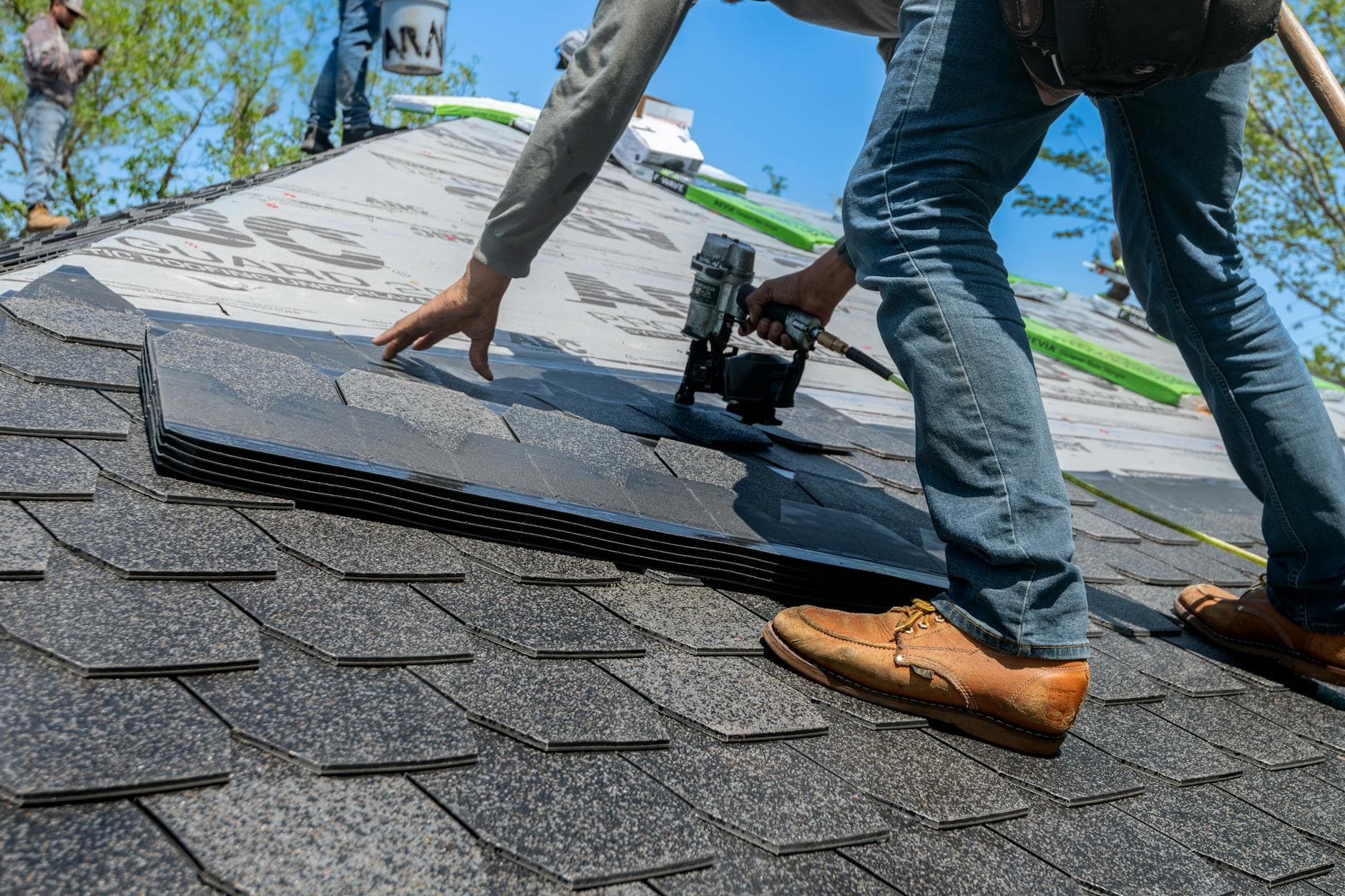
Full roof replacement for asphalt shingle, metal, tile, or flat systems: tear-off, decking inspection, underlayment, and new covering installed by a local crew.
Antelope Valley roofs face Mojave Desert UV and wildland-interface fire codes. Lancaster's Quartz Hill corridor follows the same Class A Title 24 standards as Fox Field's WUI edge.
Profile your project, get a tailored checklist, and meet Lancaster pros who specialize in your exact scope.
Roof replacement in Lancaster is a Title 24, high-desert wind, and WUI fire decision
Replacing a roof in Lancaster is shaped by California Title 24 Climate Zone 14, the Tehachapi wind corridor, and the 2025 CalFire Fire Hazard Severity Zone update. The Antelope Valley tract belt that defines most of the city carries 1980s and 1990s asphalt fiberglass shingle and post-1990 concrete tile. The right replacement spec depends on whether your project trips the 50%-area Title 24 cool-roof requirement, whether your address sits in a Moderate or Very High Fire Hazard Severity Zone, and whether your scope is a tile lift-and-relay or a tear-off asphalt reroof. Specifying the right product, the right install detail, and the right contractor for these conditions is the entire job.
If your Lancaster roof is past 18 years old, has dislodged shingles after a winter wind event, or sits inside a foothill Fire Hazard Severity Zone with a non-Class A assembly, talk to screened Lancaster replacement pros and most network contractors offer a written inspection and a no-obligation replacement scope.
What roof replacement actually means in Lancaster
A Lancaster reroof is governed by California Residential Code Section R908 plus the City of Lancaster permit framework. Overlay is capped at one existing layer, and anything beyond requires full tear-off. The city also runs a pre-tear visual ladder access check that often catches venting or flashing problems before crews open the deck. Tile, slate, or asbestos cement covering blocks overlay outright. On most 1980s and 1990s tract product, the replacement is a tear-off and reinstall scope rather than an overlay. Reference: City of Lancaster Building and Safety.
For homeowners weighing repair against replacement, the roof replacement match tool profiles the project before any contractor conversation.
Local replacement cost factors in Lancaster
Five Lancaster-specific factors shape the cost curve on a tear-off replacement:
- Labor market and commute. Lancaster sits inside the Los Angeles-Long Beach-Anaheim metro for BLS reporting on roofers (SOC 47-2181). Crews working the Antelope Valley typically commute up from the San Fernando Valley via the 14 freeway, which loads commute time into the labor line. Reference: BLS OEWS Roofers.
- Tract complexity. The 1980s and 1990s tract belt is dominated by single-story gable and hip-and-gable product on accessible lots. Cuts and waste run lower than on Quartz Hill custom builds with multi-valley geometry, two-story configurations, and steeper pitches.
- Material category. Asphalt fiberglass composition shingle is the value choice on the tract floor. Concrete tile shows up on later 1990s and 2000s subdivisions and on HOA-restricted product. Tile reroofs run a different scope curve driven by salvage, batten, and underlayment swap.
- Title 24 50%-area trigger. Any replacement that touches more than half the roof area triggers the prescriptive cool-roof requirement (see the Title 24 section). That can shift product selection toward CRRC-listed cool-color SKUs and add a CF1R-ENV documentation step.
- Tear-off scope risk. Older Antelope Valley homes with original plank decking or first-generation OSB can surface deck repair scope at tear-off. The contractor should document the deck condition assumption in writing before signing.
Permit and Title 24 specifics for Lancaster
The permit and code chain on a Lancaster reroof has four moving parts:
- Permit submittal. Reroof permits route through the Symbium expedited system effective September 1, 2025. Department contact: permits@cityoflancasterca.gov. Fees are valuation-based and quoted at submittal; the city does not publish a flat per-square or per-job number on the public permits page.
- Inspections. Pre-tear visual ladder access, sheathing or in-progress inspection after tear-off and before underlayment cover, and final inspection on completion. The pre-tear visual is a Lancaster-specific procedural step.
- Title 24 climate zone. Lancaster is in California Title 24 Climate Zone 14, the high-desert band. The steep-slope residential prescriptive minimum is aged solar reflectance 0.20 or SRI 16 paired with a CRRC-listed product. Low-slope minimum is aged SR 0.63 and TE 0.75 or SRI 75. Reference: CRRC California Title 24 values.
- 50%-area trigger. The cool-roof prescriptive requirement engages on alterations that replace more than 50% of the roof area or more than 2,000 sq ft, whichever is less. Below the threshold the work is treated as repair and the cool-roof rule does not engage. Compliance alternatives include qualifying insulation upgrades and radiant barriers documented on the same CF1R.
Verify your selected product on the CRRC product directory before signing, and confirm the contractor will file a matching CF1R-ENV cool-roof certificate at final inspection.
Class A fire assembly requirement in Lancaster
Most of the developed Lancaster footprint sits in a Moderate Fire Hazard Severity Zone under the March 2025 CalFire / OSFM LRA update. Desert-edge fringes near the Sierra Pelona push to Very High. Under the 2026 code cycle, Class A fire-rated assemblies are required statewide on reroofs in fire-hazard zones. Wood shake and shingle are banned both citywide and by state WUI rule. Qualifying products on the Lancaster reroof market include Class A asphalt fiberglass composition shingles, concrete and clay tile, metal, and fiber cement.
Check your address against the official FHSZ viewer before signing any replacement contract, and confirm the contractor will document Class A assembly compliance in the permit file.
Insurance-driven replacement in Lancaster
Wind is the primary storm driver behind Lancaster replacement claims. The Antelope Valley sits under the Tehachapi wind corridor with routine 25 to 40 mph sustained southwest winds and gust events to 65 mph on winter storms and spring frontal passages. Reference: NWS Antelope Valley zone forecast. Hail is a real but secondary driver tracked in the NOAA Storm Events Database.
The insurance posture has shifted. The California FAIR Plan grew past 555,000 residential policies in force by March 2025 (up roughly 23% from September 2024) per the California Department of Insurance. Many carriers have moved older roofs from Replacement Cost Value to Actual Cash Value and toward percentage-based wind and hail deductibles of 1% to 2% of dwelling value. The combination depresses net payout on a deferred claim against an aging roof.
For California-specific filing and settlement workflows, see our guides on California roof insurance claim process, ACV vs RCV settlement math in California, and California roof claim deductibles. For the national filing chain, see does insurance cover roof replacement and roof insurance claim deadlines.
Material guidance for Lancaster roofs
Material choice on a Lancaster replacement follows two questions: what is the existing system, and does the project trip the 50%-area Title 24 trigger.
- Asphalt fiberglass composition shingle. The dominant choice on the 1980s and 1990s tract floor. On a 50%-area-plus replacement, select a CRRC-listed cool-color SKU that meets the CZ14 steep-slope minimums. Class A assembly is the floor in fire-hazard zones.
- Concrete tile. The working assumption on later 1990s and 2000s subdivisions and on HOA-restricted product. Tile-to-tile replacement is the path of least resistance under appearance covenants in Quartz Hill master-planned product and the Fox Field area.
- Clay tile. A smaller share concentrated on Mediterranean-style higher-end builds. Standalone Class A rating and standalone WUI Class A compliance.
- Metal and fiber cement. Both carry standalone Class A ratings and satisfy WUI rules without an underlayment workaround. Standing-seam metal is a longer-lifecycle play on stay-forever holds.
For the structured asphalt-versus-metal comparison, see our asphalt vs metal roof guide.
Replacement timeline expectations in Lancaster
Three windows shape the calendar on an Antelope Valley replacement:
- Recommended install months. April through early June and October through early December. Daytime highs in those windows usually let crews finish full shifts inside material temperature tolerance.
- Months to avoid. July and August routinely push roof deck surface temperatures above 150 F on dark asphalt, which limits shingle sealing and crew safety. December through February freeze-thaw nights stress flashing seals on roofs that just got fastened.
- Typical project duration. 3 to 5 working days on a 25-square single-story tract replacement in asphalt shingle. Tile reroofs run longer when full underlayment swap, batten work, or tile salvage is in scope. Deck repair found at tear-off can add a day.
Symbium is positioned as expedited, with permit issuance commonly inside one to three business days on a clean residential reroof submittal where contractor and license records are current. Inspection cadence stretches in the first 14 days after major regional wind events.
FAQ
Do I need a permit to replace my roof in Lancaster?
Yes. The City of Lancaster requires a residential roofing permit through the Symbium expedited system for any tear-off and reroof project. Permit submittal is the contractor's job. Verify the permit number before crews start. Fees are valuation-based and quoted at submittal.
What is the Title 24 50% area trigger and how does it affect my Lancaster replacement?
If the replacement covers more than 50% of your roof area or more than 2,000 sq ft, the prescriptive cool-roof requirement engages. Steep-slope minimum in CZ14 is aged SR 0.20 or SRI 16 with a CRRC-listed product. Below the threshold, the work is treated as repair and the rule does not engage.
Do I need a Class A roof assembly in Lancaster?
Most of developed Lancaster sits in a Moderate Fire Hazard Severity Zone under the 2025 CalFire update, with desert-edge fringes near the Sierra Pelona at Very High. Under the 2026 code cycle, Class A fire-rated assemblies are required statewide on reroofs in fire-hazard zones. Wood shake and shingle are banned. Check your address on the official FHSZ viewer.
Will my insurance pay to replace a 20-year-old Lancaster roof?
It depends on the policy form and the cause of loss. Many California carriers have shifted older roofs from Replacement Cost Value to Actual Cash Value and applied percentage wind and hail deductibles of 1% to 2% of dwelling value. A deferred claim against an aging roof can yield a low net payout. Read your declarations page before filing.
What roof material works on a Lancaster Title 24 cool-roof requirement?
CRRC-listed cool-color asphalt fiberglass shingles, concrete and clay tile, metal, and fiber cement all meet CZ14 steep-slope minimums when the product carries the right reflectance and emissivity values. Standard dark architectural shingles often do not meet code without an explicit cool-roof formulation. Verify the product on the CRRC directory.
How fast does the qualifier connect me by phone with a Lancaster replacement contractor?
Typical match time is under 60 seconds via the qualifier on this page. First contractor contact is by live phone transfer when an agent is on call, or callback as fast as an hour. For wind-damaged roofs needing emergency tarp before full replacement starts, we route to rapid-availability pros first.
Browse the broader roof replacement service hub for material-by-material decision support, and the Lancaster city hub for the full local roofing market context. Talk to Lancaster roof replacement pros →
Neighborhoods we serve
- Quartz Hill
- West Lancaster
- East Lancaster
- Antelope Acres
- Lancaster Boulevard
- Fox Field
Other services in Lancaster
Roof Repair in Lancaster
Roof Repair from local Lancaster pros.
Storm Damage in Lancaster
Storm Damage from local Lancaster pros.
Flat Roofing in Lancaster
Flat Roofing from local Lancaster pros.
Metal Roofing in Lancaster
Metal Roofing from local Lancaster pros.
Roof Inspection in Lancaster
Roof Inspection from local Lancaster pros.
Roof Replacement in nearby cities
Related guides and tools
Talk to local roof replacement pros in Lancaster
Talk to a Lancaster roof replacement pro who handles full and partial replacements.
Under a minute. One local pro, not 12.
Lead-routing service. Calls may be recorded.