Chicago, IL
Roof Replacement in Chicago, IL: Talk to Local Pros Today
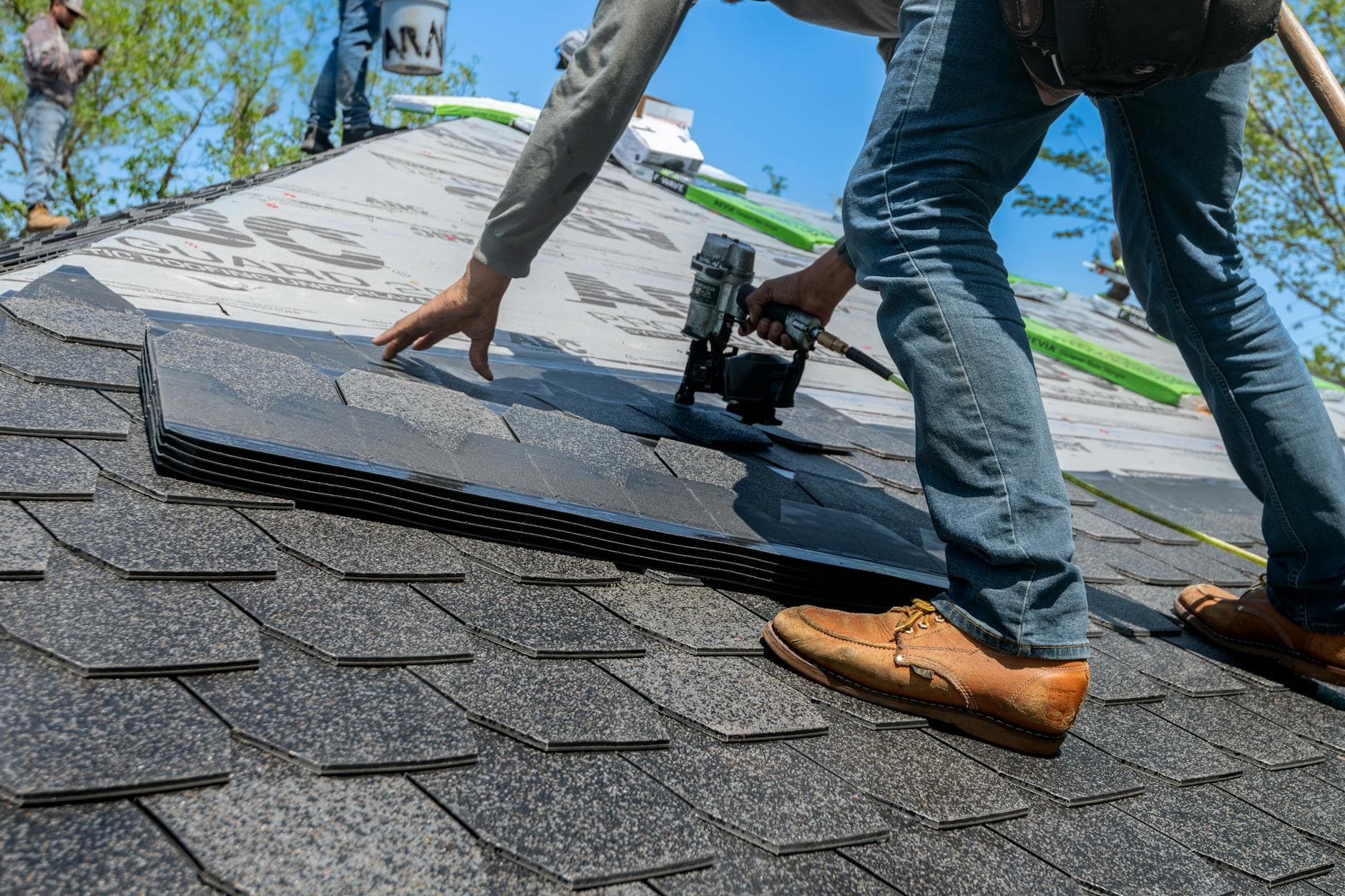
Full roof replacement for asphalt shingle, metal, tile, or flat systems: tear-off, decking inspection, underlayment, and new covering installed by a local crew.
Profile your project, get a tailored checklist, and meet Chicago pros who specialize in your exact scope.
Roof replacement in Chicago, IL is a local-code, local-climate, and local-labor-market decision. We connect Chicago homeowners to a roofer in our network who handles your scope and timeline, by phone.
Roof replacement in Chicago is an ice-dam, freeze-thaw, and flat-roof decision
Replacing a roof in metro Chicago is unlike a job in any warm-climate market. The combination of freeze-thaw cycles, sub-zero winter cold snaps, ice-dam exposure on under-ventilated attics, and a housing stock dominated by 1920s–1970s bungalows, two-flats, and three-flats means most Chicago replacements require an install spec that addresses moisture control as the primary failure mode — not wind or hail. The metro's older intown neighborhoods also run heavy on low-slope and flat-roof systems on rear additions and three-flat tops, where TPO, modified bitumen, and EPDM are the right materials rather than asphalt shingles.
If your Chicago roof is past 18 years old, has had ice-dam leaks in any recent winter, or hasn't been inspected since the most recent severe-cold-snap event, talk to screened Chicago replacement pros — most network contractors offer a written inspection plus a no-obligation replacement scope.
Why Chicago roofs wear out
Four local conditions compress the useful life of a generic asphalt roof in the metro:
- Freeze-thaw cycling. Chicago averages 90+ freeze-thaw days per year. Each cycle stresses every shingle seam, flashing joint, and underlayment lap. The compound effect over 20 winters is significantly more wear than the same shingle would see in a milder climate, even before any storm damage.
- Ice dams on under-ventilated attics. Most pre-2000 Chicago homes are under-ventilated for the local climate. Snow on the roof melts from heat loss through the attic, refreezes at the colder eave, and pushes meltwater under shingles into the structure. Ice-dam leaks are the dominant winter claim driver across Lakeview, Lincoln Park, Logan Square, Albany Park, and the bungalow belt of the Northwest and Southwest Sides.
- Wind events on the lakefront. Chicago records frequent 40–60 mph wind events year-round and occasional 70+ mph gusts during severe-storm season. Lakefront and Lake-influenced exposure (Edgewater, Rogers Park, South Shore) sees higher sustained winds than the inland suburbs.
- Flat-roof aging on rear additions. Most Chicago two-flats and three-flats have flat or near-flat rear additions over the kitchen and back porch. Standard 20-year asphalt-rolled-roofing on these surfaces fails earlier than the published warranty under the freeze-thaw-and-summer-UV cycle.
The combined effect: a generic 110-mph architectural asphalt roof in metro Chicago commonly hits 18–24 years of useful life, with most failures concentrated at the eaves (ice damming) and around penetrations (freeze-thaw flashing failure).
Material recommendations for Chicago roofs
For the typical Chicago single-family home — asphalt-shingled steep-slope main roof with a flat or low-slope rear addition — the right replacement spec is a Class H (130-mph) wind-rated architectural asphalt shingle on the steep slopes with ice-and-water shield extended at least 3 feet up from every eave (the IRC R905.1.2 minimum is 24 inches past the wall plate; Chicago practice goes further). Specify balanced soffit-and-ridge ventilation sized to attic volume per Section R806 of the IRC. Major brands meeting the wind-rating spec include GAF Timberline HDZ, CertainTeed Landmark, and Owens Corning Duration.
For the flat or low-slope rear addition, TPO single-ply membrane is the right call for most Chicago two-flats. White or light-grey reflective TPO drops summer cooling load on the rear addition and meets the Chicago Energy Conservation Code reflectance requirements for low-slope. For three-flat roofs and larger flat surfaces, modified bitumen or EPDM are both common; the contractor's familiarity with the system matters more than the membrane choice.
For homeowners staying 30+ years on stay-forever properties (Lincoln Park, Bucktown, Old Town, North Center), standing-seam Galvalume metal is gaining share on architecturally significant homes. The 40–70 year lifespan and superior cold-weather performance win on the math for long holds.
For historic-district homes in Hyde Park, Old Town, and parts of the Gold Coast, slate remains the right call where the original material is slate and the structure is rated for the dead load. Slate roofs commonly last 75–150+ years; the install is a specialized trade with a small contractor pool in the metro.
Chicago-specific install requirements
Five items separate a quality Chicago replacement from a generic job:
- Extended ice-and-water shield. This is the single most consequential spec on a Chicago re-roof. Standard 36-inch ice-and-water shield per IRC minimums is not enough on most Chicago eaves; specify a 6-foot strip from the eave inward, plus full coverage in all valleys and around every penetration. Skipping this is the textbook ice-dam-leak setup.
- Permits. The City of Chicago requires a residential roofing permit through the Department of Buildings for tear-off and re-roof projects, with inspections at decking exposure and at completion. Cook County and the surrounding municipalities (Evanston, Oak Park, Skokie, Naperville, Schaumburg) enforce parallel rules through their respective building departments.
- Ventilation rebuild. Most pre-2000 Chicago homes are under-ventilated for the local climate. A full replacement is the right moment to install balanced soffit intake and continuous ridge exhaust, sized to attic volume per IRC R806. Skipping this drives ice damming in winter and condensation in spring.
- Decking inspection. Older Chicago two-flats and three-flats commonly have plank decking with gaps too wide for modern shingle nail-pull strength. The contractor should plan to overlay 7/16" OSB or replace planks where the moisture meter trips or the gap geometry fails the shingle spec.
- Cold-weather install timing. Most asphalt shingles need 40°F+ daytime temperatures to seal properly. Late-season Chicago installs (mid-October onward) require either heated installation methods or hand-sealing the seal-strip bond on every shingle to ensure proper bonding before winter wind loads test the install.
Neighborhoods we replace roofs in
Demand patterns vary across the metro:
- Lincoln Park, Lakeview, and Wicker Park — older bungalows, two-flats, and three-flats with steep-slope main roofs plus flat rear additions. Typical replacement: architectural asphalt with extended ice-and-water shield plus TPO on the rear flat.
- Logan Square, Albany Park, and North Center — bungalow-belt housing stock hitting end-of-life now. Typical replacement: full tear-off with ventilation rebuild and extended ice-and-water shield.
- Hyde Park, Kenwood, and South Shore — older slate and tile roofs alongside asphalt. Specialty trade work common; slate replacement requires the small contractor pool that handles the material.
- Naperville, Schaumburg, and Arlington Heights — 1980s–2000s suburban housing. Typical replacement: 22–35 sq Class H wind-rated architectural with ventilation rebuild.
- Evanston, Oak Park, and Wilmette — historic-district housing with often-stringent permit requirements. HOA and historic-preservation review may add documentation steps before work starts.
Insurance and roof replacement in Illinois
Illinois requires prompt notice of loss on storm-damage claims, with most HO-3 policies imposing a one- to two-year suit limitation from the date of loss. The Illinois Department of Insurance publishes consumer guidance on roof claims. Notice windows are typically 30–60 days from the storm event.
For ice-dam claims specifically, the loss typically routes under all-other-perils on most Illinois HO-3 policies, not under the wind-and-hail deductible. That distinction matters because all-other-perils is usually a flat dollar deductible while wind-and-hail can be a percentage of Coverage A. Document any ice-dam damage with date-stamped photos and a contractor's cause-of-loss report.
See our guides on does insurance cover roof replacement, roof insurance claim deadlines, and the insurance adjuster meeting checklist for the full claim sequence.
What to expect from a network match
Every Chicago-area contractor in our network carries an active Illinois roofing credential where applicable, general liability insurance, and a clean background check before any homeowner lead reaches them. We ask network partners to re-confirm license and insurance annually. Match flow: tell us about your project (steep-slope, flat, slate, mixed), we route the lead to up to three Chicago-area pros who specialize in your material and damage profile, and you collect written quotes on the same scope before deciding. See our Chicago city hub for the full local match context, and our editorial policy for sourcing standards.
Neighborhoods we serve
- Lincoln Park
- Lakeview
- Wicker Park
- Hyde Park
- Logan Square
- Naperville
- Evanston
Other services in Chicago
Roof Repair in Chicago
Roof Repair from local Chicago pros.
Storm Damage in Chicago
Storm Damage from local Chicago pros.
Flat Roofing in Chicago
Flat Roofing from local Chicago pros.
Metal Roofing in Chicago
Metal Roofing from local Chicago pros.
Roof Inspection in Chicago
Roof Inspection from local Chicago pros.
Roof Replacement in nearby cities
Related guides and tools
Talk to local roof replacement pros in Chicago
Talk to a Chicago roof replacement pro who handles full and partial replacements.
Under a minute. One local pro, not 12.
Lead-routing service. Calls may be recorded.